

Semrush is an all-in-one digital marketing platform for SEO, keyword research, competitor analysis, content marketing, PPC (pay-per-click), and AI search visibility. It runs entirely in a browser no download needed. You log in, enter a domain or keyword, and get data on your site and your competitors’ sites. Most guides list the features and stop there.
This one goes further: it explains where Semrush data actually comes from, what each metric really means, and whether the price is justified for your situation. Reading this guide takes 12–16 minutes. Testing Semrush takes about five there’s a limited free account, and most paid toolkits include a trial.
Quick Answer
Semrush is a subscription-based digital marketing platform used for SEO, keyword research, competitor analysis, rank tracking, backlink auditing, content planning, PPC research, and AI search visibility. It is browser-based no download needed. Paid plans start at $139.95/month. A limited free account is available with no credit card required for the basic tier.
Semrush in One Paragraph (Quick Answer)
Semrush is a subscription-based digital marketing software platform. It brings SEO, content, advertising, market research, local marketing, social media, and AI visibility tools together in one place. You do not download anything. The platform gives you two kinds of information. First-party project data comes from your own website and connected accounts. Competitive intelligence is estimated from large databases. This means you can research your own domain and study competitor domains you do not own.
Semrush started life mainly as an SEO tool. It has grown into a wider brand-visibility platform, an digital marketing platform that now covers everything from keyword rankings to how often AI answers mention your brand.
What Does Semrush Do?
Semrush helps you find opportunities, spot problems, and track progress across search and AI. Semrush helps you find opportunities, spot problems, and track progress across search and AI. It answers the everyday questions of a marketer: what should I target, who am I up against, and is my work paying off?
What Is Semrush Used For? (Real Use Cases)
- Discover keywords and understand search intent.
- Analyze organic and paid competitors.
- Track keyword positions over time.
- Audit technical SEO problems on a site.
- Review backlink profiles and link quality.
- Estimate website traffic for any domain.
- Find content gaps and plan new pages.
- Monitor local search performance.
- Research PPC campaigns and ad copy.
- Measure brand mentions in AI-generated answers.
- Build automated client and stakeholder reports.
Here is one quick example. An online store could use Semrush to find product keywords, identify competing stores, detect technical problems, monitor rankings, and discover sites that might provide backlinks. One platform, one workflow, from research to reporting.
Keyword research is foundational, but it’s really audience research. You are finding out the exact language your potential customers use.
How Does Semrush Work?

How does Semrush work day to day? The process breaks into four simple stages.
1. Enter something to research
Type in a domain, URL, keyword, market, or competitor name.
2. Pick your database
Choose the country or search database that matches your target market.
3. Read the results
Review Semrush metrics, trends, and recommendations for that query.
4. Create a Project
Set up a Project to track ongoing performance for a site you manage.
There is a key difference between two modes. Research reports let you analyze almost any public domain or keyword, based largely on Semrush databases and estimates. This is ideal for competitive research. Projects let you monitor a website over time using crawled data and connected accounts. Projects power audits, tracking, and reporting.
You can connect Google Analytics and Google Search Console for extra first-party information. This mixes real data from your site with the platform’s wider estimates. After you set up your Semrush login and first project, the whole Semrush guide workflow becomes routine within a week.
Key Semrush Features and Their Uses

Every tool below does one thing well. Below you’ll find what each one does, what it shows you, and one real way to use it. If you want the deeper version usage limits, what’s inside each report, and which plan unlocks what go to our full guide to Semrush features.
Keyword Research and Keyword Magic Tool
The Semrush Keyword Magic Tool is the core of Semrush keyword research. It gives keyword ideas, search volume, search intent, Keyword Difficulty, CPC, competitive density, related questions, SERP features, and saved keyword lists. Use it for a full Semrush keyword search when planning a content calendar, then compare those search-led ideas with social conversation trends before deciding what to publish. If you have wondered what the Semrush keyword tool is, this is it: your starting point for finding terms worth targeting and checking Semrush search volume before you write.
Competitor and Keyword Gap Analysis
This set finds who competes with you and where you can win. It shows organic competitor discovery, plus shared, missing, weak, strong, and untapped keywords. It reveals competitor ranking pages and paid-search comparisons. So what is keyword gap in Semrush? The Semrush Keyword Gap Tool compares several domains and shows terms your rivals rank for that you do not. These Semrush features for competitor analysis turn guesswork into a clear target list. Semrush isn’t the only tool pulling this data, and the numbers don’t always match between platforms. If you want to see whose keyword and backlink data holds up best, we put all three side by side in our ahrefs vs spyfu vs semrush comparison.
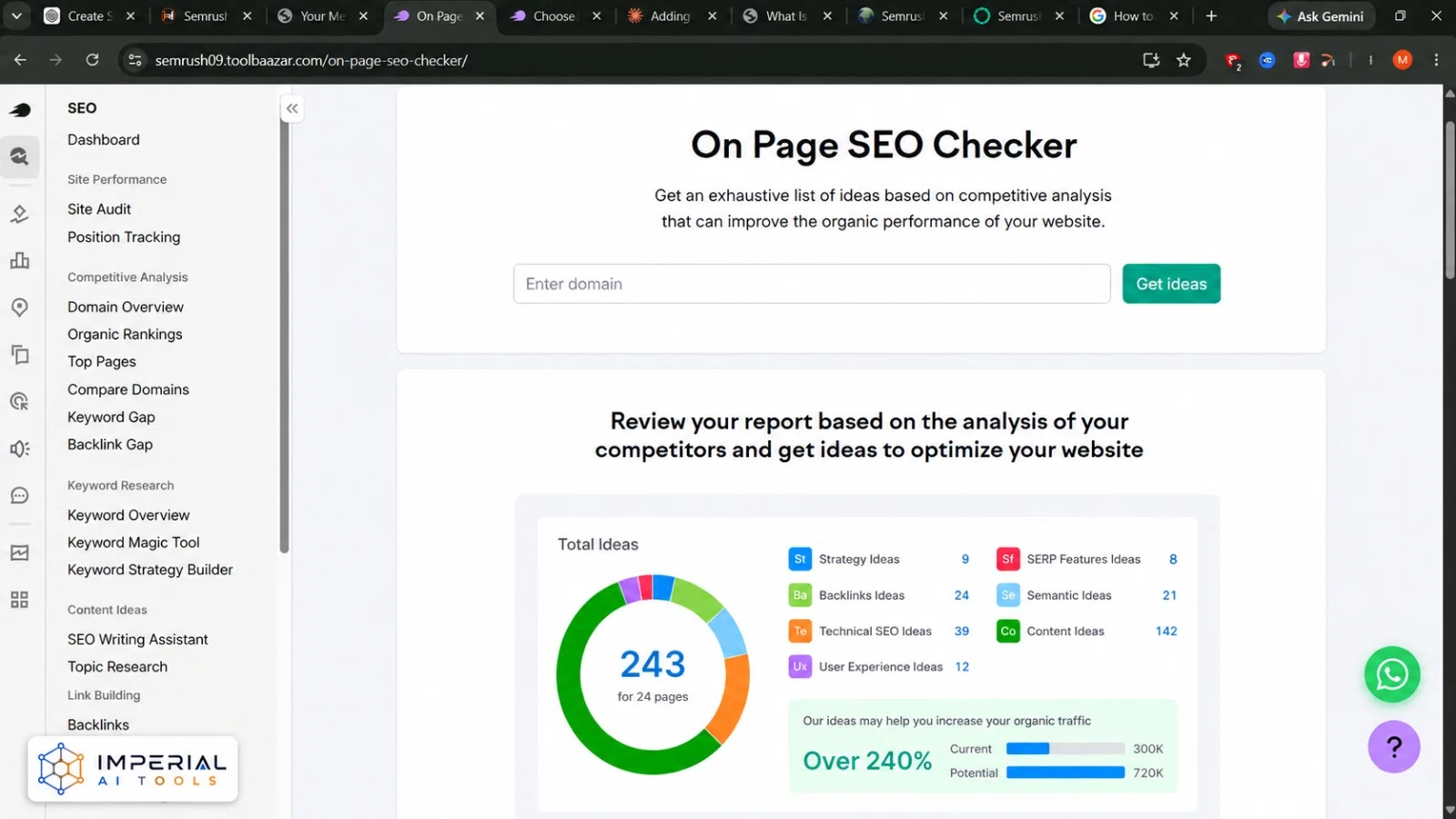
Site Audit and On-Page SEO Checker
The Site Audit crawls your website and flags issues. It checks crawlability, broken links, duplicate content, HTTPS problems, Core Web Vitals-related signals, and internal linking. The On-Page SEO Checker adds prioritized recommendations for each page. Review these before you change a live site, since automated advice can miss context that only you know. For deeper technical audits, our guide to choosing an seo crawler compares the two leaders.
Position Tracking
What is position tracking in Semrush? It monitors your chosen keywords every day. You can track by country, city or ZIP code, device, search engine, competitor, and SERP feature. This is the heart of Semrush rank tracking. It also feeds the visibility metric, so if you ask what is visibility in Semrush, it is the estimated share of clicks your tracked rankings could earn.
Backlink Analytics and Link Building
Backlink analytics shows referring domains, anchor text, new and lost backlinks, and toxic-link indicators. The Backlink Gap finds domains linking to rivals but not you. Link-building tools then surface prospects to contact. You can also study Semrush subdomain backlinks and check the Semrush Authority Score to gauge a domain’s overall strength.
Traffic Analytics and Market Research
Traffic data here is estimated. It is built for comparison, not accounting-level accuracy. You see visits, unique visitors, engagement, traffic sources, geographic distribution, and audience overlap between sites. Use this to size up a market or check yourself against a competitor. One thing to keep in mind: traffic estimates are estimates, and the two tools use different methods to get them. We break down which one gets closer to real numbers in our Semrush vs Similarweb comparison.
Content, PPC, Local and Social Tools
The wider suite covers SEO content briefs and optimization, advertising research, PLA (product listing ad) research, Google Business Profile tools, social publishing and tracking, and reporting. These extend Semrush beyond core SEO into full-funnel marketing.
Important Semrush Metrics Explained
Metrics only help if you read them correctly. Here is what each one means and how to use it.
| Metric | What it means | How to read it |
|---|---|---|
| Search volume | Estimated monthly searches | A demand indicator, not an exact count |
| Keyword Difficulty (KD) | Estimated difficulty of reaching Google’s top results | Higher scores need stronger pages and authority |
| Position | A domain’s ranking for a keyword | Compare by location, device, and date |
| Visibility | Estimated share of potential clicks from tracked rankings | Best for watching change over time |
| Authority Score | Semrush’s comparative domain-quality score | Compare similar sites; it is not a Google metric |
| Traffic cost | Estimated cost to buy the same organic traffic through ads | Use for relative comparison only |
| Branded traffic | Traffic from searches containing a brand name | Separates brand demand from new discovery |
| SERP features | Enhanced Google result types | Includes snippets, image packs, and maps |
So what is KD in Semrush, or what is keyword difficulty in Semrush? Both refer to that difficulty score. What is a good Authority Score on Semrush, what is Semrush rank, what is traffic cost in Semrush, what is volume in Semrush, and what is branded traffic in Semrush all point back to this table. And if you ask what SERP features in Semrush are, they are the special result boxes above the plain blue links.
What Is Semrush AI Visibility?

AI visibility is the newer side of the platform. It is not traditional SEO. It measures how your brand shows up inside AI-generated answers from tools like chatgpt, Gemini, and Google AI Mode. So what is AI visibility in Semrush? It is a set of tools that track your presence in AI search, not just Google’s blue links. For a closer look at the assistants people actually use, browse our ai chat tools collection.
The Semrush AI features cover an AI Visibility Score, brand mentions in AI answers, competitive AI visibility, Prompt Research, Prompt Tracking, citation analysis, brand sentiment, AI crawler accessibility checks, and gap-spotting where rivals appear but you do not. These Semrush AI visibility products sit inside the AI Visibility Toolkit. If ChatGPT is not the assistant you rely on, our chatgpt alternatives guide covers the rest.
The scale here is real. Semrush’s 2026 AI Visibility Index analyzed 126 million US AI search prompts from January through April 2026, up from just 2,500 prompts at its September 2025 launch. That growth shows how fast AI search has become a serious channel. For the official reference, see th ai visibility resources.
What Is Prompt Volume in Semrush?
Prompt volume estimates demand around AI-search topics. Semrush models it from clickstream data. For example, it may estimate that far more people ask AI to compare two products than ask about a product’s history. Use prompt volume to prioritize subjects. Do not treat it as an exact count of every prompt typed into AI tools.
What Is Semrush AI Citation Analysis?
Citation patterns differ significantly by AI platform. ChatGPT citations skew toward established publishers and official documentation. Gemini citations include more recent web content. Perplexity pulls heavily from Reddit and niche forums. Semrush’s citation analysis shows you which type of content each platform favors so you can create pages that match those patterns for your industry.
Where Does Semrush Get Its Data?
This is the part most guides skip. Knowing the source of a number tells you how much to trust it. Semrush combines several inputs:
- Proprietary web crawlers, including Bot
- Search results databases
- Machine-learning models
- Anonymous clickstream information
- Trusted third-party data providers
- Connected Google Analytics and Search Console accounts
- Your own tracking projects
The important distinction is between measured and modeled data:
- Keyword and competitive traffic figures are estimates.
- Position Tracking observes the exact keywords and settings you choose.
- Site Audit crawls the specific website you configure.
- Connected analytics give you real first-party website data.
- AI prompt data uses modeled datasets and AI-search clickstream signals.
Semrush should complement Google Analytics and Search Console, not replace them. Semrush should complement Google Analytics and Search Console, not replace them. Your connected Google tools remain the source of truth for your own traffic. Semrush shines at competitor comparison, where Google gives you nothing. For other platforms that estimate traffic and audience, browse our data analytics tools hub.
How to Use Semrush for SEO: Beginner Workflow
Here is a simple order of operations for your first month. If you want the longer version with screenshots of each screen, follow our step-by-step walkthrough on how to use Semrush.
- Create an account and log in.
- Add your website as a Project.
- Connect Google Search Console and Analytics.
- Run a Site Audit.
- Fix critical crawlability and indexing problems first.
- Enter seed topics in the Keyword Magic Tool.
- Group keywords by intent and topic.
- Use Keyword Gap to find missed opportunities.
- Optimize existing pages or create new ones.
- Add priority keywords to Position Tracking.
- Analyze backlinks and competing referring domains.
- Review changes monthly against business outcomes.
Pro tip: start small. Track one website. Choose 20 to 50 commercially relevant keywords. Fix critical issues before minor warnings. Watch leads, sales, and conversions, not rankings alone.
Semrush Pricing and Plans
Prices and limits change. Verify these numbers on the official pricing page before you buy. Figures below were checked in August 2026.
SEO Toolkit Plans (billed monthly)
| Plan | Monthly price | Best for |
|---|---|---|
| Pro | $139.95/month | Freelancers, beginners, small businesses |
| Guru | $249.95/month | Growing teams and agencies |
| Business | $499.95/month | Large agencies and established businesses |
Semrush One Bundles (billed monthly)
| Plan | Monthly price | Includes |
|---|---|---|
| Starter | $199/month | SEO plus AI visibility for smaller teams |
| Pro+ | $299/month | Higher SEO, project, keyword, and prompt limits |
| Advanced | $549/month | Larger limits for established teams and agencies |
A few things to know before you pick:
- Annual billing lowers the effective monthly cost, saving roughly 17%.
- Annual plans are paid upfront for the year.
- Toolkits like Content, Local, Traffic, and AI Visibility can cost extra.
- Extra users, reports, and add-ons raise the total.
- Most core toolkits offer a short trial, though availability varies. Our guide to the Semrush free trial explains which plans qualify and how to activate one.
Pricing checked against Semrush’s official SEO Toolkit limits and the Semrush One comparison. The Semrush One bundles launched in late 2025 to combine classic SEO with the AI Visibility Toolkit.
Semrush Payment Methods and Billing
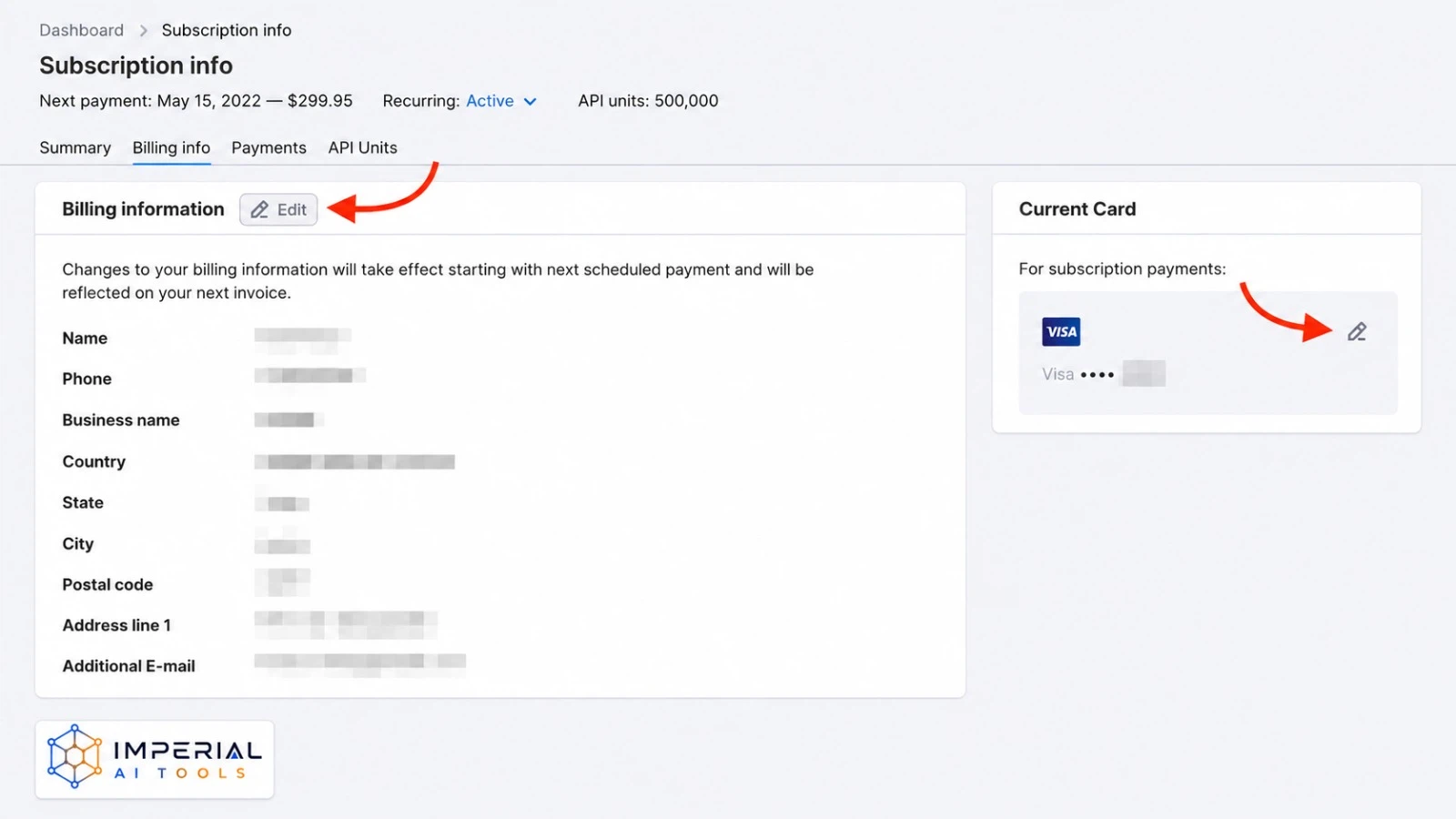
Semrush accepts Visa, Mastercard, Discover, American Express, and UnionPay physical cards where supported. Eligible annual subscriptions may allow wire transfers, and certain US annual accounts can pay by check. Taxes depend on your billing location. Subscriptions renew automatically until you cancel, and annual plans are charged upfront rather than monthly. Virtual cards may not work for trial activation. Confirm details in the official Semrush billing FAQ.
How to Cancel Your Semrush Subscription or Free Trial
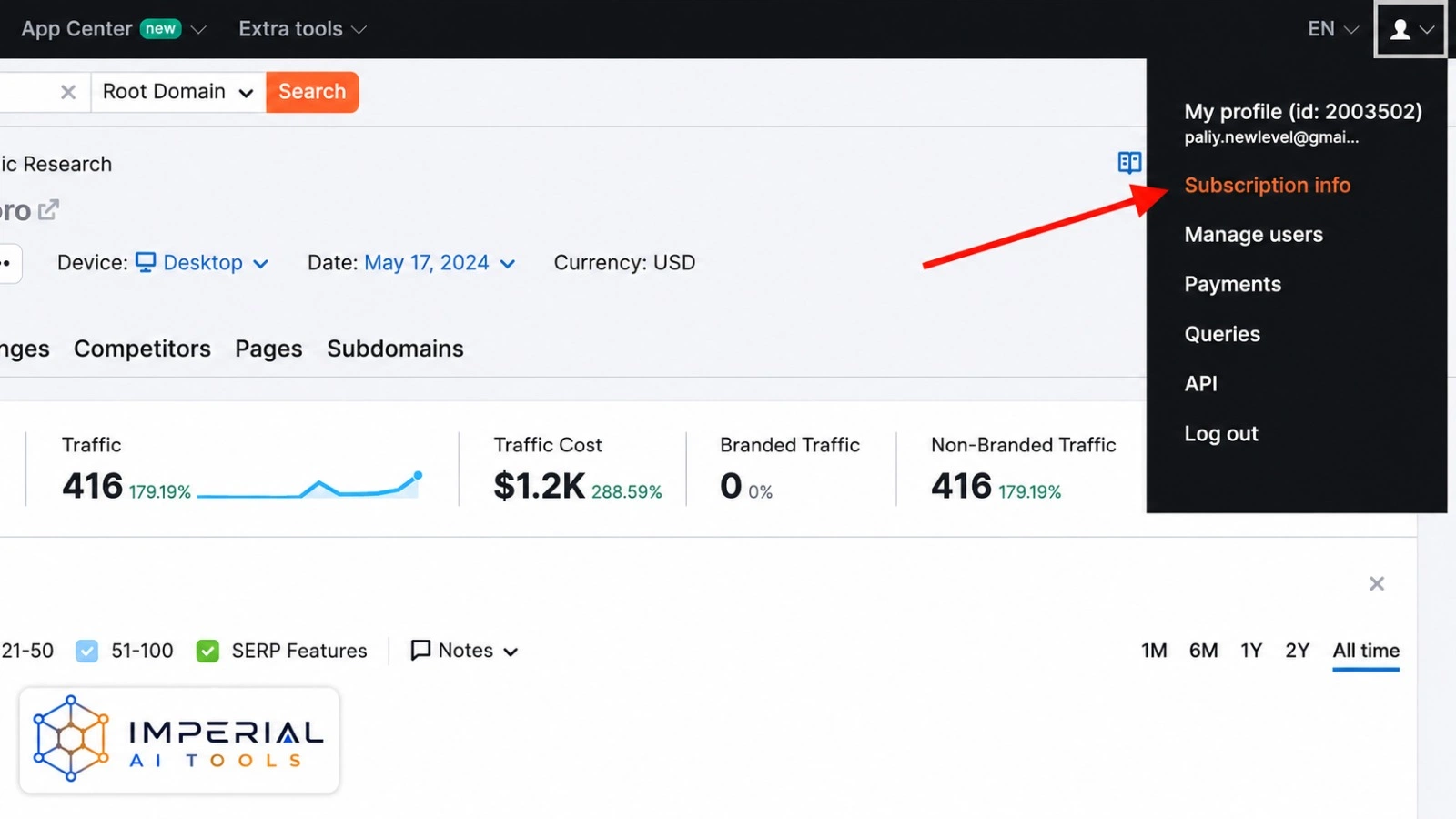
You can cancel a paid plan or free trial from inside your account. The steps are quick.
- Log in to your account
- Sign in with your usual Semrush login.
- Open Subscription Info
- Find it in your account settings.
- Find your active subscription
- Locate the plan you want to stop.
- Select the cancellation option
- Choose to cancel that subscription.
- Confirm the request
- Complete the on-screen confirmation.
- Save the confirmation email
- Keep it as proof of cancellation.
Paid features usually stay active until the current billing period ends. Your account then moves to the limited free plan. Cancel a free trial before its renewal date to avoid a charge. For the full version, including refund rules and add-on traps, see our guide on how to cancel demrush subscription.
Semrush Pros and Cons
No tool is perfect. Here is an honest balance of Semrush advantages and disadvantages to help you judge if Semrush is worth it.
| Advantages | Limitations |
|---|---|
| Broad set of marketing tools in one place | Expensive for small or occasional users |
| Strong keyword and competitor databases | Interface can feel overwhelming at first |
| Detailed SEO audits and rank tracking | Competitor traffic figures are estimates |
| Useful reports for agencies and teams | Some features need separate toolkits |
| Covers SEO, PPC, content, local, and AI search | Extra users and limits raise the cost |
| Connects with Google tools | Automated advice still needs human review |
| Extensive learning resources | Free account has tight limits |
Most Semrush reviews land in the same place: powerful and complete, but priced for people who use it often. We go deeper into each point, with a decision table by user type, in our full write-up on semrush pros and cons.
Who Should Use Semrush?
Semrush fits some users far better than others.
- Best suited to
- SEO professionals, content marketers, digital marketing agencies, in-house marketing teams, ecommerce businesses, publishers, PPC specialists, local and multi-location businesses, and brands monitoring AI-search visibility.
- May not be ideal for
- hobby websites needing only basic keyword data, very small businesses without time to use the reports, users who only need first-party analytics, teams needing one narrow tool, and businesses that cannot justify the monthly cost.
Explore Semrush Alternatives and Related SEO Tools
Semrush is powerful, but it is not the best match for every budget or workflow. Explore our independent reviews and comparisons to weigh pricing, features, and specialist strengths before you commit including our guide on moz keyword search limits by plan for anyone considering Moz as a lower-cost alternative. Start with the ahrefs review and the similarweb review.
Conclusion: Is Semrush Worth Using?
Semrush is a comprehensive digital marketing platform for businesses that need more than basic keyword research. Its strongest value comes from combining SEO audits, competitor analysis, rank tracking, backlinks, content research, PPC data, and AI visibility in one system. Its estimated metrics need context, and its price is hard to justify for occasional users. Agencies, marketing teams, and growing businesses get the most value. Beginners should test the free account or a trial before choosing a paid plan.
Imperial AI Tools take: If you still ask what is Semrush and whether it fits you, here is our view. Start on the free account, connect your own site, and run one Site Audit and one Keyword Magic search. That single hour tells you more than any review. Semrush earns its price once you use competitor data and rank tracking every week. For a lone blogger, a cheaper focused tool often does the job. For a team, few platforms match its depth.
Frequently Asked Questions About Semrush
Semrush is used for SEO, keyword research, site audits, competitor analysis, rank tracking, backlinks, content planning, PPC (pay-per-click) research, and AI search visibility. Marketers use it to research their own site and competitors, then plan and track improvements over time.
Yes. Researching a public domain does not change that website in any way. Connecting your own site through Google Search Console or Analytics requires normal account permissions. Use strong passwords and limit team access to keep your connected accounts secure.
SemrushBot is the web crawler Semrush uses to collect data for some of its reports and tools. Website owners can control its access through robots.txt rules if they want to allow or block the crawler on their site.
Prompt volume is an estimate of how often people ask AI tools about a topic. Semrush models it from clickstream data. Treat it as a demand signal to prioritize content, not an exact count of every prompt typed into AI chat tools.
Semrush offers a limited free account with a few daily searches and one small project. Full features need a paid plan starting at $139.95 per month. Eligible toolkits usually include a free trial, so you can test them before you buy.
Worth it if: you use it at least weekly, you manage competitor research, or you track rankings for multiple clients. The Pro plan at $139.95/month works out to roughly $4.66 per day less than most agency tools. Not worth it if: you run a single blog, you only need traffic from one or two keywords, or you already have Ahrefs and only want a second opinion. In those cases, the free account or a cheaper focused tool is enough.