
If you’ve searched for a Claude guide recently, you’ve probably noticed something frustrating: most articles either explain what Claude AI is in three paragraphs and stop, or they dive straight into developer documentation that assumes you already live in a terminal. This Claude guide sits in the middle a complete walkthrough from your first login to advanced workflows with Claude Code, written for people who actually want to use the tool, not just read about it.
One quick disambiguation before we start, because Google mixes these up constantly: this guide covers Claude AI, the assistant made by Anthropic not Claude Monet, the French Impressionist painter. If you came here looking for Claude Monet artwork, you’re in the wrong (but understandable) place. Everyone else, let’s get into it.
What Is Claude?

Claude is a family of AI models and an assistant built by Anthropic, an American AI safety company founded in 2021 by former OpenAI researchers, including siblings Dario and Daniela Amodei. So if you’ve wondered which country owns Claude AI it’s the United States, with Anthropic headquartered in San Francisco.
At its core, Claude is a large language model: you type (or speak, using Claude’s chat voice feature on mobile), and it responds. But calling it a chatbot undersells what it does in 2026. Claude can write and debug code, analyze documents hundreds of pages long, search the web, generate spreadsheets and presentations, and through tools like Claude Code and Cowork work autonomously on your files for minutes or hours at a time.
You can access Claude through the web at claude.ai, the Claude mac desktop app (and Windows equivalent), iOS and Android apps, and the Claude API via the developer console. For anyone asking “can I use Claude for free?” yes, and we’ll cover exactly what the free tier includes shortly.
“I’ve followed tech for 25 years, and I’ve never felt a larger gap between the ~1 million people using Codex/Claude and the rest of humanity.”
Claude Models Explained: Sonnet, Opus, Haiku, and Beyond

Understanding the model lineup is the first thing that separates casual users from power users, because picking the right model changes both quality and cost.
As of mid-2026, the current family looks like this:
| Model | Best For | Notes |
|---|---|---|
| Claude Haiku 4.5 | Fast, simple tasks | Cheapest and quickest |
| Claude Sonnet (Sonnet 4.6) | Everyday work, coding | The balanced default most people use |
| Claude Opus (Opus 4.8) | Complex reasoning, agentic coding | Succeeded Opus 4.5 from late 2025 |
| Claude Fable 5 | Long-running agents, frontier tasks | Newest top tier, released mid-2026 |
A quick history note for context: Claude 3.5 Sonnet (2024) was the release that put Anthropic on the map for developers, and the Claude 4 generation through Opus 4.5 cemented its coding reputation. Current models support up to a 1 million token context window enough to hold entire codebases or several novels’ worth of text in a single conversation. The claude token limit you actually experience depends on your plan and the surface you’re using, but even free users get generous context compared to most competitors.
You don’t need to memorize model names. The app picks a sensible default, and paid plans let you switch per conversation. When you see “keep thinking” indicators, that’s Claude’s extended thinking mode working through harder problems step by step before answering.
How to Get Started (Login, Apps, and First Steps)
Getting started takes about two minutes:
- Go to claude.ai and click Sign Up. You can register with an email address or a Google account this is also where you’ll handle Claude AI login on return visits.
- Verify your account. You’ll receive a claude verification code by email; enter it to confirm.
- Confirm you’re 18+. Anthropic requires all users to be adults (more on why in the FAQ).
- Start chatting. Type naturally, as you would to a colleague. Upload files with the paperclip icon, toggle web search on, and try asking Claude to build something.
For the best experience, download the desktop app. It unlocks Cowork Anthropic’s agentic mode where Claude works directly with folders on your computer plus cleaner file handling than the browser. Mobile apps mirror your account, and the claude chat voice option lets you talk instead of type.
One underused early step: open Settings → Capabilities and turn on Artifacts, memory, and code execution. Many new users never enable these and miss half the product. Note that Claude doesn’t currently offer password-protected individual chats if you need that separation, use separate Projects or accounts.
“Claude, you are a cutie-pie!”
Claude Pricing and Plans
This is where most people’s questions concentrate, so let’s be thorough. Does Claude have a free trial? Not exactly instead, there’s a genuinely usable permanent free tier, which is better than a trial that expires.
| Plan | Price | What You Get |
|---|---|---|
| Free | $0 | Claude on web/desktop/mobile, web search, file uploads, Projects, Artifacts with usage limits |
| Claude Pro | $20/mo ($17/mo billed annually) | ~5x free usage, Claude Code access, Opus models, Research mode |
| Max 5x | $100/mo | 5x Pro usage for heavy daily users |
| Max 20x | $200/mo | 20x Pro usage, top priority the claude max plan for professionals living in the tool |
| Team | $25/seat/mo Standard, $125/seat Premium | Central billing, admin controls; Premium seats add Claude Code |
| Enterprise | Custom | SSO, audit logs, compliance Claude for enterprise deployments |
Pricing verified July 2026 at claude.com/pricing these numbers change, so treat this as a snapshot.
A few practical notes from real usage. The claude pro tier is the right default for almost everyone: it’s the cheapest way to get Claude Code, and May 2026 capacity expansion doubled the five-hour session limits for Pro and Max while removing peak-hour throttling. The claude max plans don’t add features they add headroom. Upgrade to max 5x only if you’re getting rate-limited multiple times a week.
On discounts: people search constantly for a claude student discount, claude ai promo code, or anthropic student discount, and the honest answer is that Anthropic doesn’t offer standing discounts on paid plans only occasional limited-time promotions announced through official channels. Claude AI for students still works out well because the free tier is strong, but there’s no verified student pricing program as of this writing. Signing up for the claude newsletter is the reliable way to catch any claude offers when they appear. There’s currently no formal claude referral program or guest pass system for consumer plans either, despite persistent rumors.
How to cancel a Claude subscription (for anyone searching “cancel claude”):
- Log in at claude.ai.
- Click your initials → Settings.
- Open the Billing tab.
- Select Cancel subscription and confirm.
Claude Code (Setup and Installation Guide)
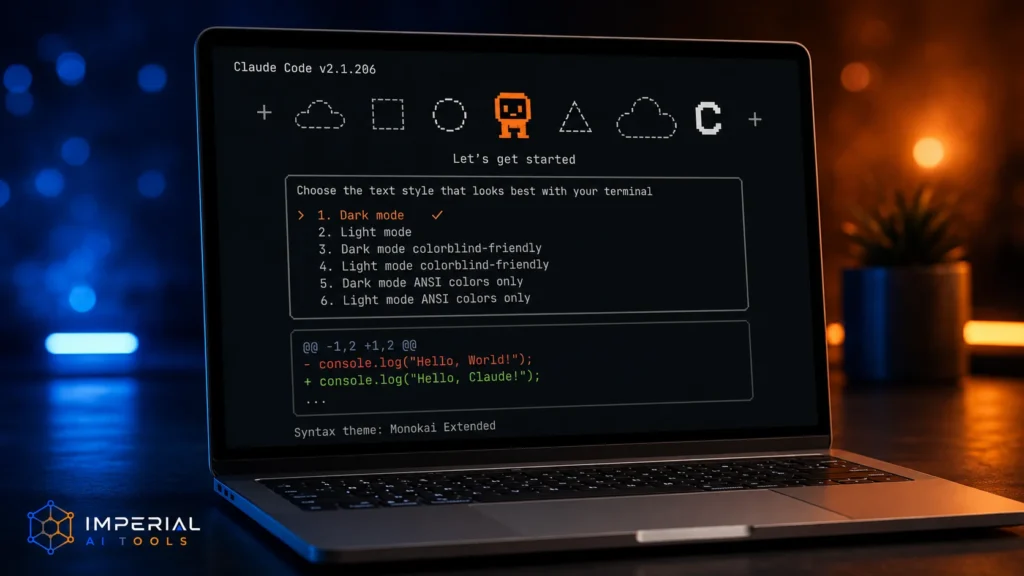
If Claude the chat app is a brilliant colleague, Claude Code is that colleague with hands. It’s Anthropic’s agentic coding tool often described as a claude ai coding tool that lives in your terminal that reads your codebase, edits files, runs commands, and ships working software. What is Claude Code best at? Large refactors, debugging across many files, and building features end to end. It launched in February 2025, hit general availability in May 2025, and passed $1 billion in annualized revenue before year’s end adoption that fast tells you something.
By 2026 it runs in six places: the terminal, a desktop app (the code tab in Claude Desktop), VS Code and JetBrains extensions, a claude code web interface at claude.ai/code, and even Slack. There’s also Claude Code remote control, which lets you kick off a task in your terminal and monitor it from your phone.
Claude Code Installation Guide
How much is Claude Code? There’s no separate fee it’s included with every paid plan, making Pro at $20/month the cheapest entry point. Your usage draws from your plan’s shared pool (chat and Code together), and heavy users can add claude credits or upgrade tiers when they hit limits. Here’s the claude code setup guide for each platform:
macOS / Linux (native installer recommended):
curl -fsSL https://claude.ai/install.sh | bash
Or via npm (the classic claude code install method):
npm install -g @anthropic-ai/claude-code
Run Claude Code on Windows: you have two options. Native Windows works via PowerShell for casual use, but the community-recommended path is claude code WSL install Ubuntu through Windows Subsystem for Linux, then run the Linux installer inside your WSL terminal. To install claude code WSL-style, open your Ubuntu terminal and run the same curl command above. Shell hooks and MCP servers behave far more predictably there.
After installing:
claude # launches and opens browser login
claude doctor # verifies your installation
/init # creates a CLAUDE.md project memory file
That CLAUDE.md file is the single highest-leverage configuration in the whole tool it’s persistent project memory that loads every session, holding your stack details and conventions. Combine it with claude code skills (reusable task instructions Claude loads automatically), claude code connectors via MCP servers for databases and browsers, and hooks for automation, and you’ve built a genuine engineering system rather than a chat window. The claude code github integration deserves special mention: Claude can open pull requests, respond to review comments, and run in GitHub Actions.
For teams, Team Premium seats include Claude Code (the effective claude code team plan), while Standard seats don’t worth checking before you roll it out company-wide.
Claude Skills, Projects, and Integrations
Three features turn Claude from a Q&A box into a workspace:
- Projects
- Let you group conversations around persistent context upload brand guidelines, a codebase, or research once, and every chat in that project starts informed. This is Claude’s answer to Custom GPTs, and frankly the better implementation for ongoing work. Think of Claude as a planner here: store your goals and constraints in project instructions, and it keeps every session aligned.
- Claude Skills
- Are reusable instruction packages. Anthropic ships official ones (document creation, spreadsheet work), and the community builds thousands more. A popular example is the humanizer skill can Claude humanize text? Yes: a claude humanizer skill rewrites stiff AI-sounding drafts into natural prose, and it’s one of the most-installed community skills for writers.
- Claude integrations
- Connect external tools through MCP (Model Context Protocol): Google Drive, Slack, Notion, GitHub, and hundreds of third-party servers. Claude import features also let you bring memory and preferences over from other AI providers a genuine migration path rather than starting from zero. On the creative side, features in the claude imagine family and claude design tooling generate interactive artifacts and visual layouts directly in chat, and the recognizable claude logo (that warm orange starburst) now shows up inside Excel, PowerPoint, and Chrome through official extensions.
Claude Prompt Guide: Getting Better Answers
The single highest-leverage skill in this entire claude user guide is prompting. Claude is forgiving of casual requests, but structured input produces dramatically better output. Four habits worth building:
Give it a role and context. “Act as a senior Python reviewer; this codebase serves 50k daily users” beats “check my code.”
Tell it what you don’t want. Negative instructions shape output almost as much as positive ones “avoid corporate buzzwords” or “don’t use the phrase ‘delve into'” measurably changes results.
Show examples. Paste three samples of your writing and say “match this voice.” Claude’s style-matching is a standout strength.
Structure long requests. For anything complex, separate context, task, and constraints:
CONTEXT: I run a 12-person e-commerce brand selling ceramics.
TASK: Draft a Q3 email sequence 4 emails, welcome to first purchase.
CONSTRAINTS: Under 150 words each, warm but not gushing, one CTA per email.
One honest caveat from daily use: Claude is trained to be agreeable, so if you assert something false, it may nod along rather than push back. Ask it explicitly to challenge your assumptions when accuracy matters “tell me what’s wrong with this plan” gets you a fundamentally different (and more useful) response than “what do you think?”
Claude vs ChatGPT: Why People Are Switching
The migration from ChatGPT to Claude became one of 2026’s defining AI stories. Users are moving because of Claude’s more human-like writing, superior handling of complex tasks, and ethical concerns around OpenAI’s partnerships and because switching got easy: Claude’s memory import feature pulls your preferences over from other providers in about ten steps.
From months of running both, the honest breakdown:
| Dimension | Claude | ChatGPT |
|---|---|---|
| Long-form writing | ✅ More natural, less hedging | Good, drifts on 1,000+ words |
| Coding (claude coding) | ✅ Claude Code is category-leading | Capable, less agentic |
| Image generation | ❌ None natively | ✅ Strong |
| Voice | Basic chat voice | ✅ More polished |
| Document analysis | ✅ Larger context window | Solid |
That table covers the headlines for the full feature-by-feature scoring, benchmark results, and pricing math, see our detailed Claude vs ChatGPT comparison.
Troubleshooting: Is Claude Down? Bans, Limits, and Fixes
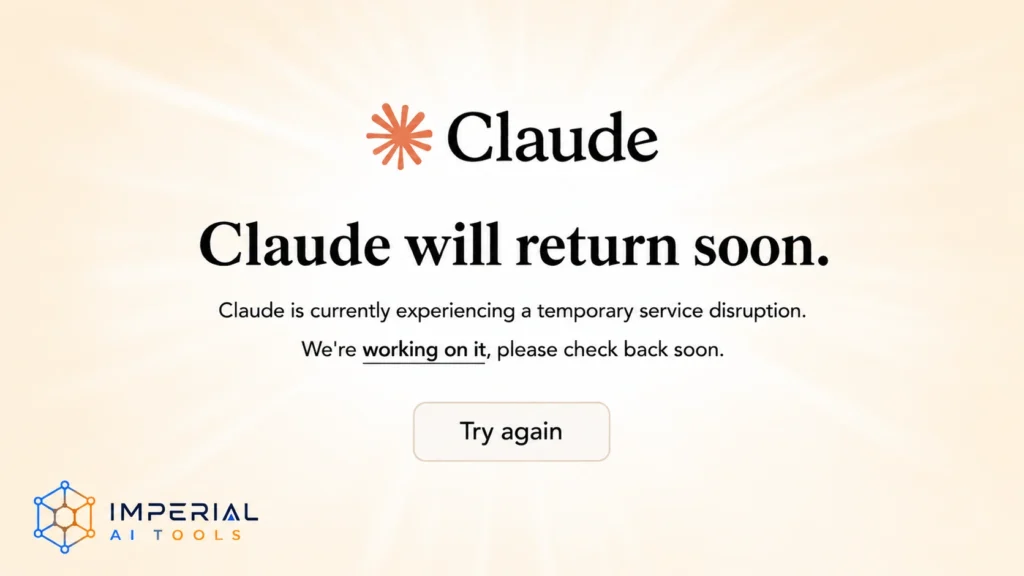
Is Claude down? When Claude isn’t responding, check status.claude.com the official claude status page with live incident reports. Searching “claude down” on social media works too, but the status page is authoritative. Most outages resolve within an hour.
Hitting usage limits? Limits work on a rolling window shared between chat and Claude Code. Fixes: switch to a lighter model (Sonnet instead of Opus), run /compact in Claude Code to trim context, start fresh conversations at natural breakpoints, or upgrade tiers. Regarding “does Claude have unlimited image uploads” no; uploads count against your usage allowance like everything else, though limits are generous on paid plans.
Account banned or locked? This surged in 2026 and is almost always age-related. Anthropic requires all users to be 18 or older, and its detection systems sometimes flag adults incorrectly. If flagged, you’re locked out until you verify your age adults who complete ID verification get their accounts back, and there’s an appeal form if verification fails. Other ban causes include policy violations (automation abuse, prohibited content) and account sharing. If you believe you were wrongly flagged, complete the verification promptly the links expire.
Conclusion
The gap between people who dabble with AI and people who get real leverage from it comes down to exactly what this Claude guide covered: knowing which model fits the task, which plan matches your actual usage, and how to prompt with structure instead of hope. Claude in 2026 is no longer just a chatbot between Claude Code shipping software autonomously, Cowork organizing your files, and a free tier generous enough for genuine work, it’s the most complete AI workspace you can open in a browser today.
The best next step takes five minutes: go to claude.ai, run one real task from your actual work through it not a test question, a real deliverable and judge the output yourself. Then come back to the prompting section above and run it again with structure. The difference is usually the moment it clicks.
Frequently Asked Questions
Claude is owned by Anthropic, an AI safety company headquartered in San Francisco, California so the United States. Anthropic was founded in 2021 by former OpenAI executives, including CEO Dario Amodei and his sister, President Daniela Amodei
Claude isn’t different from AI it is an AI assistant, so the real question is how it differs from other AI tools like ChatGPT or Gemini. The core difference is Anthropic’s training method, called Constitutional AI: instead of relying purely on human feedback to shape behavior.
Anthropic has never confirmed a single official origin for the name, but the leading explanation is a tribute to Claude Shannon, the MIT mathematician whose 1948 paper “A Mathematical Theory of Communication” founded information theory the mathematical basis for everything digital, from file compression to the internet itself.
Three factors drive the migration: Claude’s more human writing and stronger reasoning, autonomous project completion through Claude Code and Cowork, and trust ChatGPT introduced ads while Claude stays ad-free. Memory import makes switching painless.
Anthropic requires all users to be 18 or older, a strict rule with no exceptions. Claude can discuss adult topics, so rather than building a filtered kids’ mode, Anthropic chose a hard age gate, enforced through app store verification laws.
Most 2026 bans stem from age-verification enforcement adults get wrongly flagged as minors and must verify identity through Yoti to restore access. Other bans follow terms-of-service violations: prohibited content, abusive automation, reselling access, or account sharing.