
Lovable AI

Lovable AI

Website Building
Lovable AI builds working apps from plain English. What it does, where it breaks, and whether it belongs in your workflow.
Popularity Score
72%
89/100
Easy To Use
90/100
AI Quality
89/100
Speed
92/100
Integrations
92/100
Value for Money
88/100
Customer Support
In This Guide

Software used to require a translator. You had an idea, and someone who understood machines turned it into a product. That gap is closing.

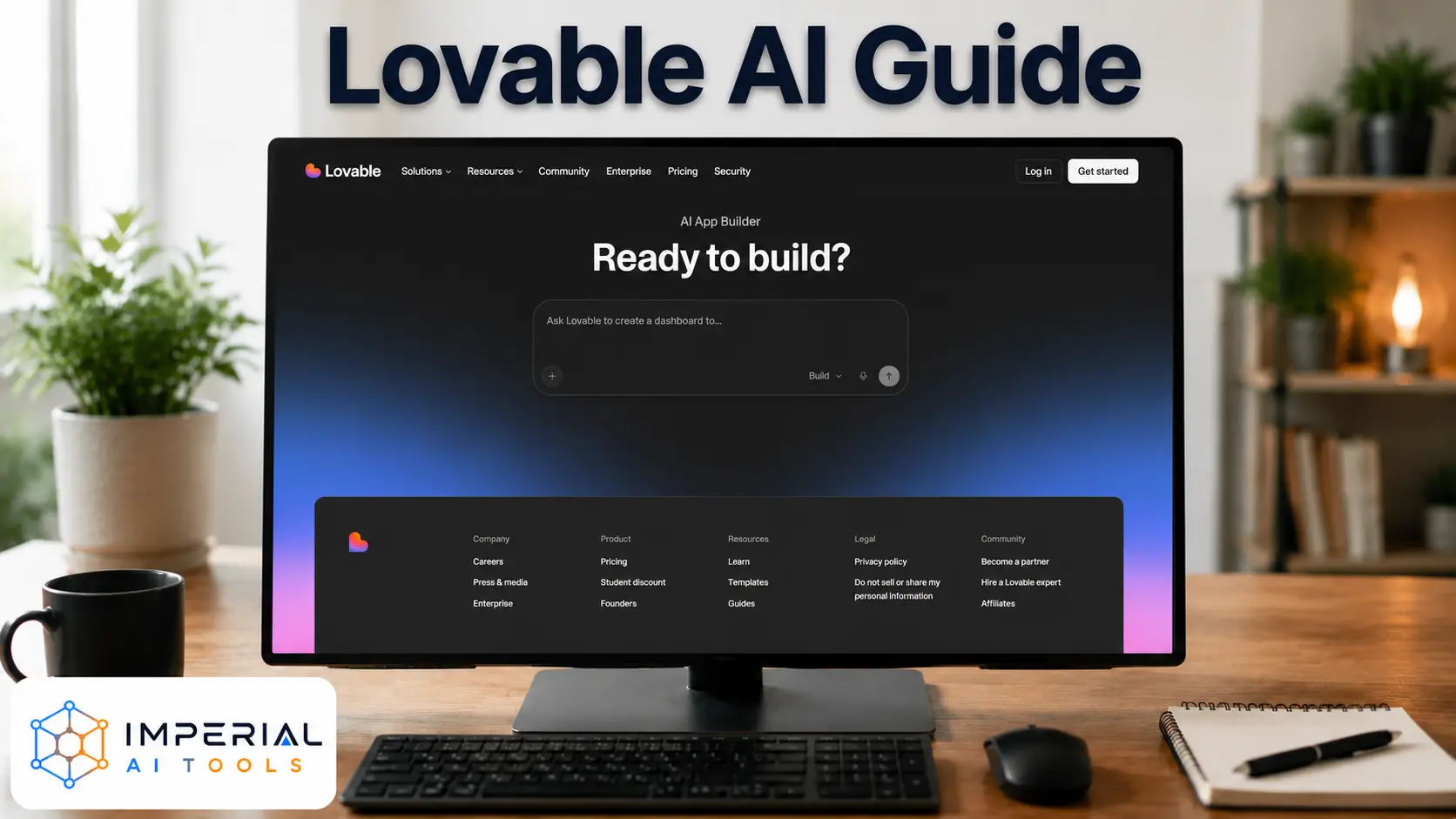
Lovable AI is an app and website builder that works from written instructions. You describe what you want in normal language or code, no framework choices, no setup, and it builds it. Interface, structure, working code, live link.

This review covers what Lovable does, how the workflow runs, what you can realistically build with it, where it breaks down, and whether it earns a place in your process.

Quick Answer

Lovable AI is an AI app builder that creates websites and applications from natural language prompts. It generates designs, code, and functional prototypes without requiring advanced coding skills.

What Is Lovable AI?

Lovable AI turns written descriptions into working software.

You type a sentence about the app you want. It produces the application, not a mockup, not a design file, but something that runs, stores data, and can be shared with a link.

  • How AI app builders work.
    • The AI reads your description, decides what technology to use, writes the code, and assembles the pieces. You never see the machinery unless you ask to.
  • Why creators and startups use it.
    • Speed. An idea that took a month to test now takes an afternoon. Most ideas fail. Finding out sooner is worth more than building carefully.
  • Traditional development vs AI development.
    • The old way starts with planning, then setup, then code, then deployment. Weeks pass before anyone sees anything working. The AI way inverts it you get something working immediately and then find out what is wrong with it.
  • The second approach is faster. It is not automatically better. It works when you are exploring, but it struggles when you already know exactly what you need.
“Think of it like asking a technical friend, colleague, or consultancy to build something for you – except now, you can just ask [Lovable].”

How Does Lovable AI Work?

  • Describe your idea.
    • You enter a prompt explaining the app or website you want. Specific prompts produce usable results. Vague prompts produce vague apps.
  • AI builds the project.
    • Lovable generates the interface, creates the application structure, and writes the code. This happens in front of you.
  • Customize your app.
    • You modify features, adjust the design, and add functions mostly through conversation. Something is wrong, you say so, it rebuilds.
    • That third step is where the real work happens. The first generation is a draft.

Lovable AI Key Features

  • AI app builder.
    • Applications from text prompts. Ideas become working prototypes in a single sitting.
  • AI website builder.
    • Landing pages, business websites, and modern interfaces without a template library.
  • AI code generation.
    • Real code, automatically written. You can read it, learn from it, and modify it which separates Lovable from tools that hide the code and keep it.
  • No-code and low-code development.
    • Beginners can build without writing anything. Developers can skip the boring parts.
  • Rapid prototyping.
    • Build an MVP, test the startup idea, and find out whether anyone wants it before committing money to a development team.
“Becoming an entrepreneur doesn’t require money, luck, or a background in business. All it takes is ambition AND [Lovable].

How to Use Lovable AI

  1. Open Lovable AI
  2. Enter your project idea
  3. Let the AI generate the app
  4. Review and customize the result
  5. Improve and launch your project

Step four is not optional. Nobody publishes the first generation.

What Can You Build With Lovable AI?

Websites. Portfolio sites, business sites, and landing pages.

Web applications. Dashboards, SaaS products, and internal tools are the small, focused applications that engineering never has time for.

Startup projects. MVPs and product prototypes built to answer one question: does anyone want this?

Capabilities

What Lovable AI Can Do

Feature lists tell you what a tool promises.

Multi-page applications with routing

Builds apps with multiple screens and working navigation between them, not single-page demos.

User roles and permissions

Generates access control admins see one thing, regular users see another, and the system enforces it.

File and image uploads

Handles the storage layer so users can upload documents, photos, and attachments without you configuring anything.

Search and filtering

Adds working search across your data, plus filters and sorting, on request.

Email sending

Wires up transactional email confirmations, password resets, notifications.

Payment collection

Connects payment processing so an app can charge money.

Use cases

Where It Earns Its Place

The tool is not useful everywhere. It is useful where speed beats precision when you need something working in front of a person before you know whether it deserves to exist.

Test an idea cheaply

Every company has one nobody understands. Describe it, get a real app.

Replace the spreadsheet

Turn complex spreadsheets into simple, user-friendly apps with forms, dashboards, and automated workflows.

Build internal tools

Trackers, forms, checklists. Always next quarter. Build them now.

Pitch with a working product

Slides ask people to imagine. A prototype removes the imagining.

Make a design real

Import from Figma. Get a version that stores data and breaks properly.

Skip the boring half

Logins, forms, basic screens. Generate them. Spend your time on the hard part.

The honest verdict

Lovable AI Pros and Cons

Where the tool wins, and where it stops.

The good

Pros

Beginner-friendly

No coding background required to build a working app.

Fast

Development takes hours, not weeks.

No setup

Turn concepts into interactive prototypes quickly before investing time and money into full development.

setup

Removes the configuration work that kills projects before they start.

Startup-ready

Genuinely useful for testing ideas cheaply.

The not-so-good

Cons

Complexity ceiling

Large apps hit a wall where corrections stop landing cleanly.

Code review needed

Generated code needs checking, especially around logins and data storage.

Limited control

You cannot always fix what you cannot read.

Prompting is a skill

The tool is marketed as if it is not.

Dependency Risk

Projects may become dependent on the platform, making migration or switching tools more difficult later.

FAQ

Questions everyone eventually asks.

Clear answers to the common questions people ask before choosing an AI tool.

Is Lovable AI publicly traded?
No. Lovable is a private company. There is no Lovable stock and no share price. Searches for "Lovable AI stock" are looking for something that does not exist.
Who founded Lovable?
Lovable was co-founded by Anton Osika (CEO) and Fabian Hedin (CTO). Osika, a former CERN physicist and creator of GPT-Engineer, built Lovable into a “vibe coding” platform that lets users create full-stack apps using natural language prompts.
Can Lovable build mobile apps?
Lovable builds web applications. These open in a phone browser and can be made to work well on a small screen. They are not native apps and do not go into the Apple or Google app stores by default.
Can I export my code from Lovable?
Yes. Projects can be synced to GitHub and downloaded. You own the source code and can host it anywhere.
Is Lovable a no-code tool?
Not exactly. No-code tools hide the code and keep it. Lovable writes real code and gives it to you. The experience feels like no-code. The output is not.
What happens when the app gets too complex?
The correction loop degrades. Fixes stop landing, and changes start breaking unrelated features. At that point, export the code and bring in a developer.
Keep reading

Explore More AI Tools.

Editor-tested tools that pair well with this one.

Tagshop AI UGC video ad generator shown on a laptop screen

Tagshop AI

Tagshop AI turns a product link into a UGC-style video ad in minutes. It uses realistic AI avatars, so brands...
MyLens AI Review featured image showing the MyLens website interface on a laptop in a modern office.

MyLens AI

MyLens AI turns text, PDFs, and YouTube videos into clickable timelines, mind maps, and flowcharts. See features, pricing, and real...
Maisa AI digital workers platform shown on a laptop screen

Maisa AI

Maisa builds AI digital workers that automate regulated business processes and record every decision they make. Here is how the...
Get Weekly AI Tools & Expert Prompts.

10,000+ readers · Spam-free since 2026

Scroll to Top