
Picking between QuillBot vs Grammarly is one of the most common questions writers ask, and the confusion makes sense. Both tools check grammar. Both use AI. Both have free plans. But they are built for very different jobs. Grammarly works best while you write. It fixes grammar, spelling, and tone in real time inside Gmail, Google Docs, and Word. QuillBot works best after you write. It paraphrases, summarizes, and rewrites text in seconds, and it adds citations for academic work. In this Quillbot vs Grammarly comparison, we break down the features, real pricing, accuracy, and best use cases for students, professionals, and content writers. By the end, you will know exactly which tool fits your writing, or whether you need both.
What Is QuillBot?
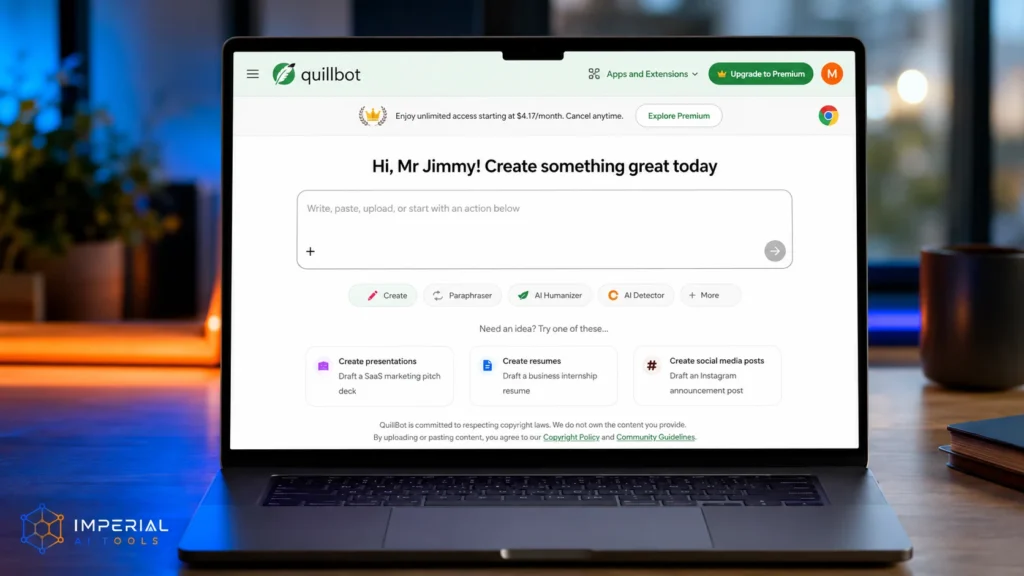
QuillBot is an AI writing platform built around text transformation. Its flagship Paraphraser rewrites any passage in modes including Standard, Fluency, Formal, Academic, Simple, Creative, Expand, and Shorten, with a synonym slider controlling how much the wording changes.
Around the Paraphraser, QuillBot bundles a free Grammar Checker, a Summarizer, a Plagiarism Checker (Premium), an AI Detector, an AI Humanizer, a Citation Generator covering APA, MLA, and Chicago, and a Translator supporting dozens of languages. QuillBot Flow ties these into one writing workspace, and there are Chrome, Word, macOS, and mobile apps.
What Is Grammarly?
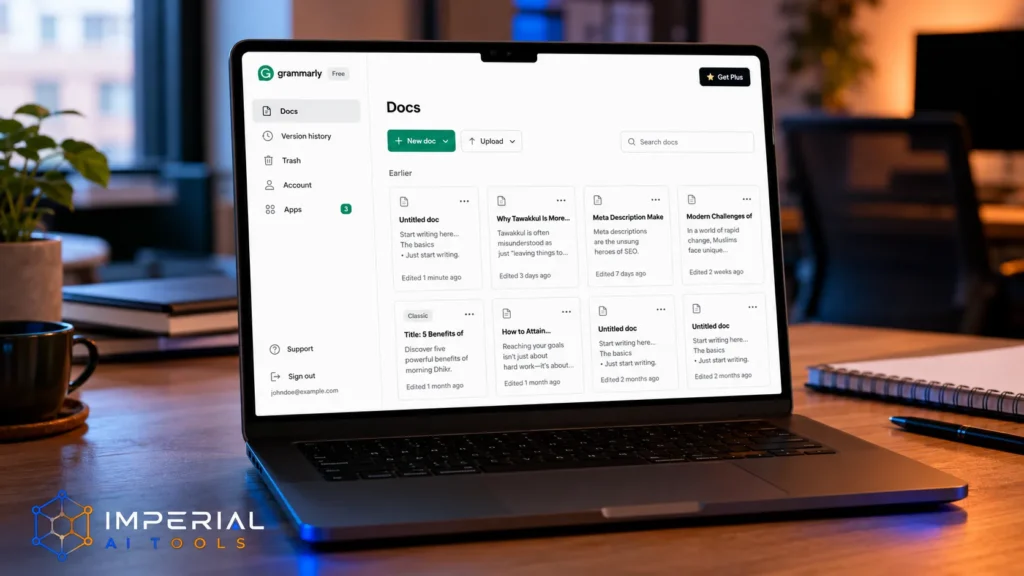
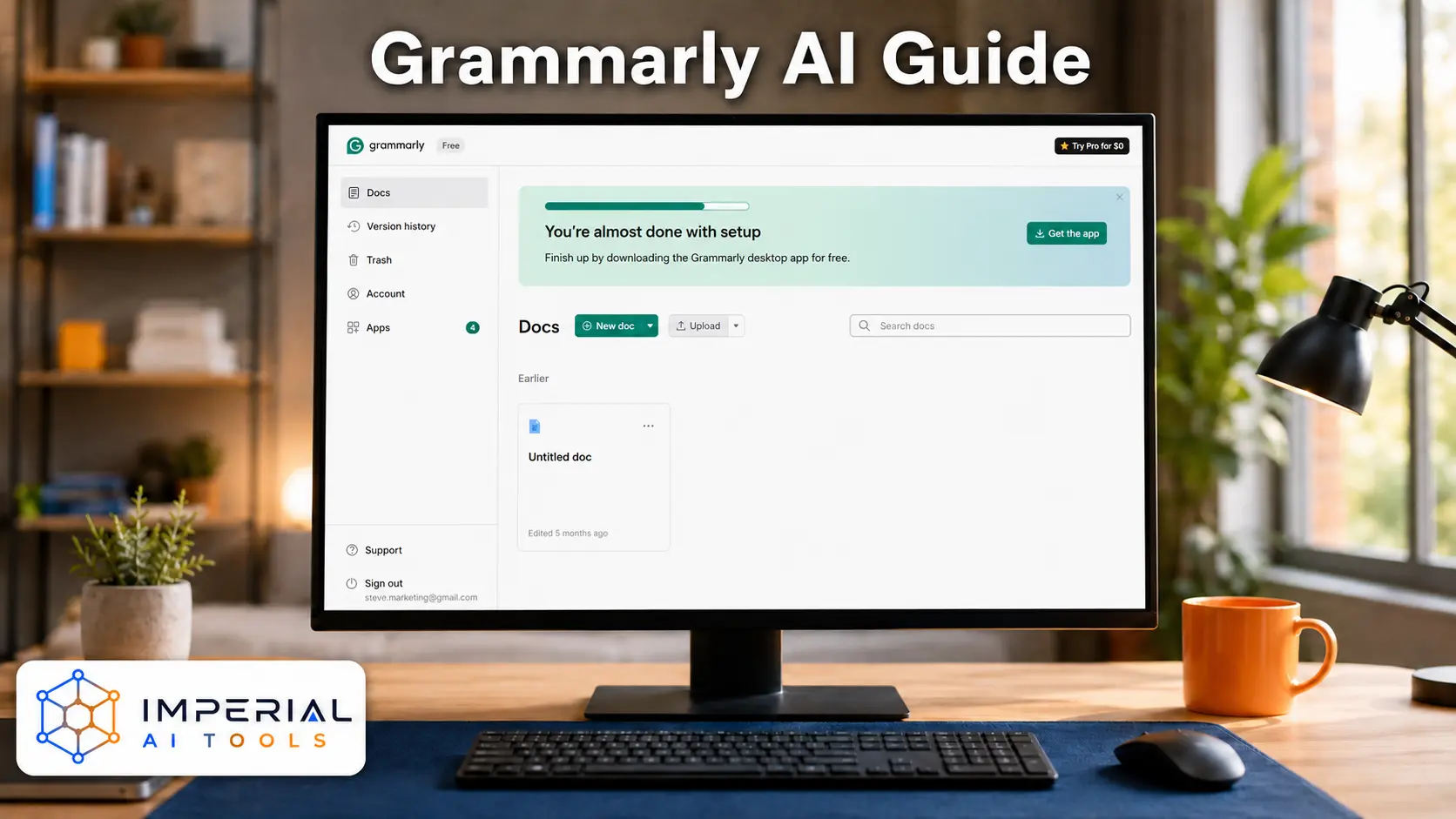
Grammarly is a real-time AI writing assistant. It checks grammar, spelling, and punctuation as you type, then adds clarity suggestions, tone detection, vocabulary improvements, and full-sentence rewrites. Each suggestion comes with a short explanation, making it useful for learning, not just fixing.
Grammarly also includes generative AI for drafting (with monthly prompt limits), a plagiarism checker on paid plans, and AI detection alongside Authorship, which tracks how a document was composed. Its biggest advantage is reach: browser extensions, Windows and Mac apps, Word and Outlook add-ins, Google Docs support, and a mobile keyboard follow you across most of the apps you already use. Is Grammarly considered AI? Yes: its suggestions are AI powered, which matters if your school or employer restricts AI assistance.
Grammarly vs Quillbot: Feature Comparison
| Feature | Grammarly | QuillBot |
|---|---|---|
| Grammar checking | ✅ | ✅ |
| AI | Generative AI with monthly prompt limits | AI rewriting modes plus Flow workspace |
| Vocabulary suggestions | ✅ | ✅ (synonym slider) |
| Explanations for edits | ✅ | ❌ (limited) |
| Paraphrasing | Basic sentence rewrites | ✅ Multiple dedicated modes |
| Paraphrasing history | ❌ | ✅ (Premium) |
| Summarizing | Via AI prompts | ✅ Dedicated Summarizer |
| Plagiarism checking | ✅ (Pro) | ✅ (Premium) |
| Tone detection | ✅ | ❌ |
| Freeze words | ❌ | ✅ |
| Accuracy | Strongest for grammar and clarity | Strongest for natural rewording |
| Team features | Style guides, brand tones, analytics | Team plan with shared Premium seats |
| Integration | Browsers, Word, Docs, desktop, most apps | Chrome, Edge, Word, macOS app |
| Mobile app | Keyboard for iOS and Android | iOS and Android apps |
Quillbot vs Grammarly: What Does Each Tool Excel At?
What does QuillBot do better?
- Paraphrasing
- Multiple rewriting modes, a synonym slider, and Freeze Words to lock terms you don’t want changed.
- Summarizing
- A dedicated Summarizer for articles, papers, and long documents.
- Citations
- A built-in Citation Generator for academic referencing.
- Text transformation
- Paste, rework, compare, and reuse, with paraphrasing history on Premium.
- Price
- A cheaper annual plan than Grammarly Pro.
What does Grammarly do better?
- Grammar and spelling accuracy
- The most dependable corrections of the two, with explanations for every edit.
- Passive voice and clarity
- Flags weak constructions and suggests tighter alternatives.
- Tone detection
- Tells you how a message will land before you hit send.
- Real-time editing everywhere
- Corrections appear inside Gmail, Docs, Word, and your browser, with no copy-pasting.
- Team use
- Style guides, brand tones, and analytics on business plans.
Quillbot vs Grammarly for Paraphrasing
QuillBot’s Paraphraser offers several distinct modes, so the same paragraph can come back more formal, more academic, simpler, longer, or shorter. Freeze Words is its standout unique feature: you can lock brand names, technical terms, or quotes so the rewrite never touches them; Grammarly has no equivalent. Premium users also keep a paraphrasing history, handy for copy-paste rewriting workflows on SEO drafts.
Does Grammarly paraphrase? Yes, but modestly. Its full-sentence rewrites work well for fixing one clunky sentence inside a live document. For deliberately reworking whole passages, though, the answer to “Quillbot vs Grammarly for paraphrasing” is QuillBot, and it isn’t close.
Quillbot vs Grammarly for Grammar and Passive Voice
Grammarly catches more errors across grammar, punctuation, and word choice, and its passive voice detection is genuinely useful: it flags the construction and usually proposes an active rewrite. Every correction includes a short explanation, so it doubles as a learning tool.
Is QuillBot good for grammar? It’s solid, and its Grammar Checker is free without word limits. But it applies fixes with little explanation and doesn’t watch your writing in real time. For long-form documents, business emails, and anything written directly in Google Docs or Word, Grammarly’s always-on corrections are the stronger workflow.
Quillbot vs Grammarly for AI Detection and Humanizing
QuillBot offers a free AI Detector plus an AI Humanizer that rewrites machine-sounding text into natural phrasing. Grammarly offers AI detection alongside Authorship, a distinctive feature that records how a document was composed (typed, pasted, or AI-generated), giving writers proof of their own work rather than just a score.
One caution applies to both: no AI detector is fully reliable. These tools produce probability estimates, and false positives and false negatives are common, so no score should be treated as proof. On Quillbot vs Grammarly AI detection, QuillBot leans toward humanizing output, while Grammarly leans toward documenting authorship.
Quillbot vs Grammarly for Academic Writing and Students
QuillBot’s toolkit maps neatly onto student tasks: the Summarizer condenses readings, the Citation Generator handles references, the Academic mode reworks drafts into formal register, and the plagiarism checker screens work before submission. That combination is why Quillbot vs Grammarly for students usually tilts toward QuillBot on value.
Two integrity notes matter here. Turnitin states its AI writing detection is designed to flag AI-paraphrased text, so running sources through any paraphraser and submitting the result is risky as well as ethically questionable. And paraphrasing someone else’s ideas without citation is plagiarism regardless of the tool. Grammar correction is broadly accepted, but AI-assistance policies vary, so check your institution’s rules first.
Quillbot vs Grammarly Pricing: How Much Does Each Tool Cost?
Both tools have genuinely usable free tiers, which is why “QuillBot vs Grammarly free” is such a common search. Here is official pricing at the time of writing.
Grammarly pricing:
- Free
- Basic grammar, spelling, punctuation, tone detection, and a limited number of AI prompts per month.
- Pro
- $12 per member per month billed annually, or $30 month to month. Adds full-sentence rewrites, advanced tone suggestions, plagiarism checking, and a larger AI allowance.
- Enterprise
- Custom pricing for large organizations.
QuillBot pricing:
- Free
- Paraphrasing capped at 125 words per input with two modes, the full Grammar Checker, a limited Summarizer, plus the Citation Generator, Translator, and AI Detector.
- Premium
- $19.95 monthly, $39.95 quarterly, or $99.95 annually ($8.33 per month). Unlocks unlimited paraphrasing, all modes, paraphrasing history, and the Plagiarism Checker.
QuillBot’s pricing varies by region, so your checkout price may differ from US figures, and both companies adjust plans periodically; confirm on the official pricing pages before subscribing. Is QuillBot Premium worth it? For heavy paraphrasing, yes; it costs less per year than Grammarly Pro. Is Grammarly worth it? If you write daily in email and documents, Pro usually pays for itself in saved editing time.
Should You Choose QuillBot or Grammarly?
Neither tool is perfect, and in the Grammarly vs QuillBot debate the right answer depends on your workflow.
- Choose Grammarly if you want the best grammar correction, tone and clarity feedback, passive voice suggestions, and real-time editing across your apps.
- Choose QuillBot if you want the best paraphrasing, summarizing, citation support, and rewriting modes at a lower annual cost.
- Use both together if your workflow runs from drafting through rewriting to final proofreading; they overlap less than people assume.
So, is QuillBot better than Grammarly? For transforming text, yes. For producing clean text in the first place, no. Match the tool to the job.
Conclusion
The Quillbot vs Grammarly debate has no single winner, because the two tools are built for different moments in the writing process. Grammarly earns its place as the everyday assistant: it catches more grammar errors, explains its corrections, reads your tone, and works inside the apps you already use. QuillBot earns its place as the transformation engine: no mainstream rival paraphrases, summarizes, and handles citations as smoothly, and its annual plan costs less.
If you mostly write from scratch and want cleaner text in real time, start with Grammarly. If you mostly rework existing text, especially for study or content repurposing, start with QuillBot. Both have free plans, so test each on a real piece of your own writing before paying for either.
Frequently Asked Questions
Turnitin says its AI writing detection is built to flag AI-paraphrased text, including output resembling QuillBot’s. Detection isn’t guaranteed in every case, but using a paraphraser to disguise sourced material is risky and breaches academic integrity policies whether or not it gets flagged.
It depends on the job. QuillBot is better for paraphrasing and summarizing, and other editors compete on style analysis. For real-time grammar, tone, and clarity checking across apps, Grammarly remains the strongest all-round option.
In the Quillbot vs Grammarly matchup, Grammarly catches more errors and explains its corrections, making it the more accurate grammar checker overall. QuillBot’s checker is respectable and free without limits, so it’s a strong budget alternative.
No. Grammarly has a genuinely useful free plan covering grammar, spelling, punctuation, and tone detection, but advanced rewrites, plagiarism checking, and the larger AI allowance require Grammarly Pro, which starts at $12 per month billed annually.
QuillBot’s free AI Detector estimates whether text was generated by models like ChatGPT and returns a probability score. Like all AI detectors, it is not 100% reliable and can misclassify both human and AI writing, so treat its results as guidance rather than proof.