
What Is Seedance?
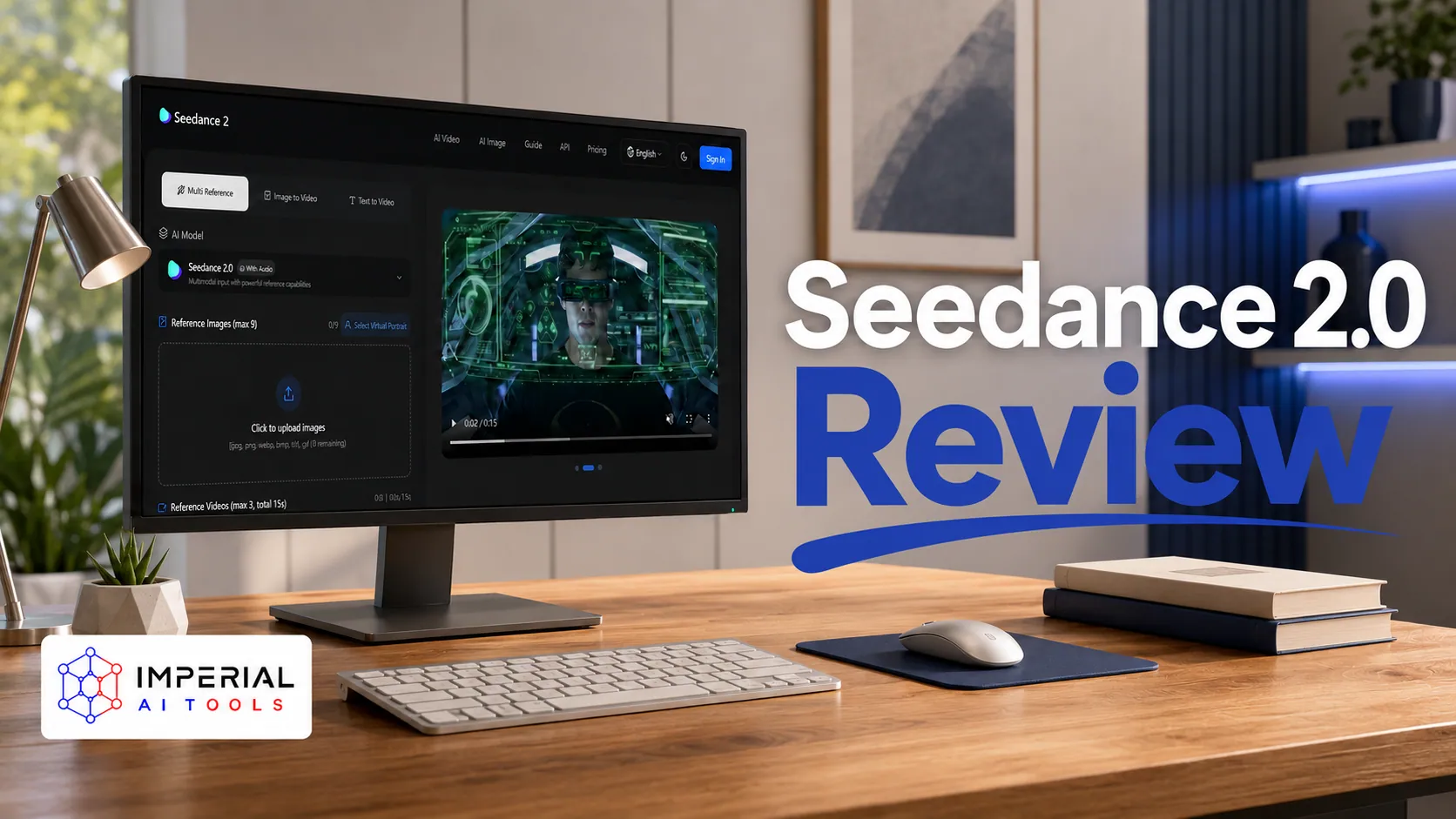
Seedance is ByteDance’s AI video generation model family, the same company behind TikTok and CapCut. First launched in June 2025, it turns text prompts, images, audio, or reference video into short, realistic clips, and sits in direct competition with OpenAI’s Sora, Google’s Veo, and Kling.
It belongs to ByteDance’s wider “Seed” foundation model programme, alongside the Seedream image models and the Seed language series. What separates Seedance from the pack is not raw resolution but physical plausibility: objects that fall correctly, fabric that moves like fabric, two people who can interact without their limbs melting into each other.
That realism is also why it became controversial. Shortly after release, clips featuring real actors and scenes from well-known films spread across the internet, impressive enough to alarm rights holders and prompt genuine questions about whether AI could replicate Hollywood-style production.
Seedance quickly went viral for creating clips featuring famous actors and characters, causing fascination for its realism and concern about widespread copyright infringement.
The Seedance Versions Explained
Version confusion is the single biggest source of questions about this model. Here is the line as it stands.
| Version | Released | What It Added |
|---|---|---|
| Seedance 1.0 | June 2025 | The original text-to-video release |
| Seedance 1.5 Pro | Dec 2025 | Native joint audio-video, multilingual lip-sync |
| Seedance 2.0 | Feb 2026 | Real-world physics, multimodal inputs, IP guardrails, C2PA |
| Seedance 2.5 | June 2026 | 30-second one-shot generation (announced) |
Seedance 1.5 Pro
Built on a Dual-Branch Diffusion Transformer with 4.5 billion parameters, 1.5 Pro’s advance was generating audio and video simultaneously rather than in sequence. Most models produce a silent clip then bolt on sound, which is why lips so often drift out of time. Seedance maps individual phonemes to lip shapes across 8+ languages, landing sync to the millisecond.
Seedance 2.0
The version that made headlines. Its focus is physical accuracy: the model understands how fabric shakes out, how a skater’s jump resolves, how light shifts when an object moves. It accepts four input types (text, image, audio, video) and can take up to nine images, three video clips, and three audio files at once, referencing your own assets for composition, motion, and camera movement.
It also handles two interacting subjects cleanly, group choreography, sparring, and ball sports where most image-to-video models still produce warped limbs.
Seedance 2.5
Announced at Volcano Engine 2026 in June, with a headline claim of 30-second one-shot generation and improved long-form shot consistency. Seedance 2.0 gained 4K output at the same time. Official benchmarks, pricing, and API timelines were not public at the time of the announcement, so treat the details as provisional.
IP Guardrails and C2PA Watermarking
ByteDance’s response to the copyright backlash is built into the product. Seedance 2.0 ships with IP protections designed to restrict the generation of copyrighted characters, and applies C2PA watermarking, an industry provenance standard that embeds data identifying content as AI-generated.
This matters beyond compliance. As AI video becomes harder to tell from real footage, provenance metadata is how platforms, journalists, and courts will distinguish the two. Seedance building it in from the start is a point in its favour, not a limitation.
On copyrighted characters. A large share of Seedance search interest involves recreating famous films and characters. Even where a model will generate something, publishing or monetising content featuring copyrighted characters can infringe rights holders’ IP. Use original concepts for any commercial work.
How to Use Seedance?
- Consumer apps: Seedance powers AI video in CapCut and Dreamina, the simplest route for most creators.
- Developer platforms: Volcano Engine and BytePlus provide official API access.
- Third-party APIs: Platforms including WaveSpeed, Replicate, and fal.ai host Seedance models.
- Input: Start from a text prompt, or anchor to an image for tighter control over identity and lighting.
- Settings: Pick duration, aspect ratio (16:9, 9:16, 1:1, 4:3), and resolution to suit budget and platform.
Who Should Use Seedance?
Best suited for: short-drama and vertical video producers, advertisers needing realistic dialogue-driven creative, social teams working at volume, and developers building video generation into their own products.
Not ideal for: long-form filmmakers, since clips remain short even with 2.5’s extended length; anyone needing guaranteed regional availability; and anyone whose plan depends on generating existing IP, which the guardrails are built to prevent.
Imperial AI Tools Feedback
Seedance earns its reputation. The physics handling is the real differentiator: objects behave, fabric moves correctly, and two people can share a frame without dissolving into each other. Paired with native audio generation and genuinely accurate lip-sync, it produces clips that survive a second look, which is more than most models manage.
The version churn is the practical headache. Four releases in twelve months means anything you learn may be outdated by the next quarter, and the newest version rarely has public pricing or benchmarks at announcement. Access also depends heavily on your region and platform.
Credit where due on the guardrails. ByteDance shipped IP protections and C2PA watermarking rather than waiting to be forced, which is more than several competitors have done. Our view: the strongest realism available in short-form AI video right now use it on original concepts, and check which version you are actually running before you build a workflow on it.
Suggestions For Improvement
- Publish clear, consistent pricing across official and partner platforms.
- Provide a single authoritative version-comparison page.
- Expand regional availability beyond current restrictions.
- Release official benchmarks alongside version announcements.
- Clarify commercial usage rights for generated output.