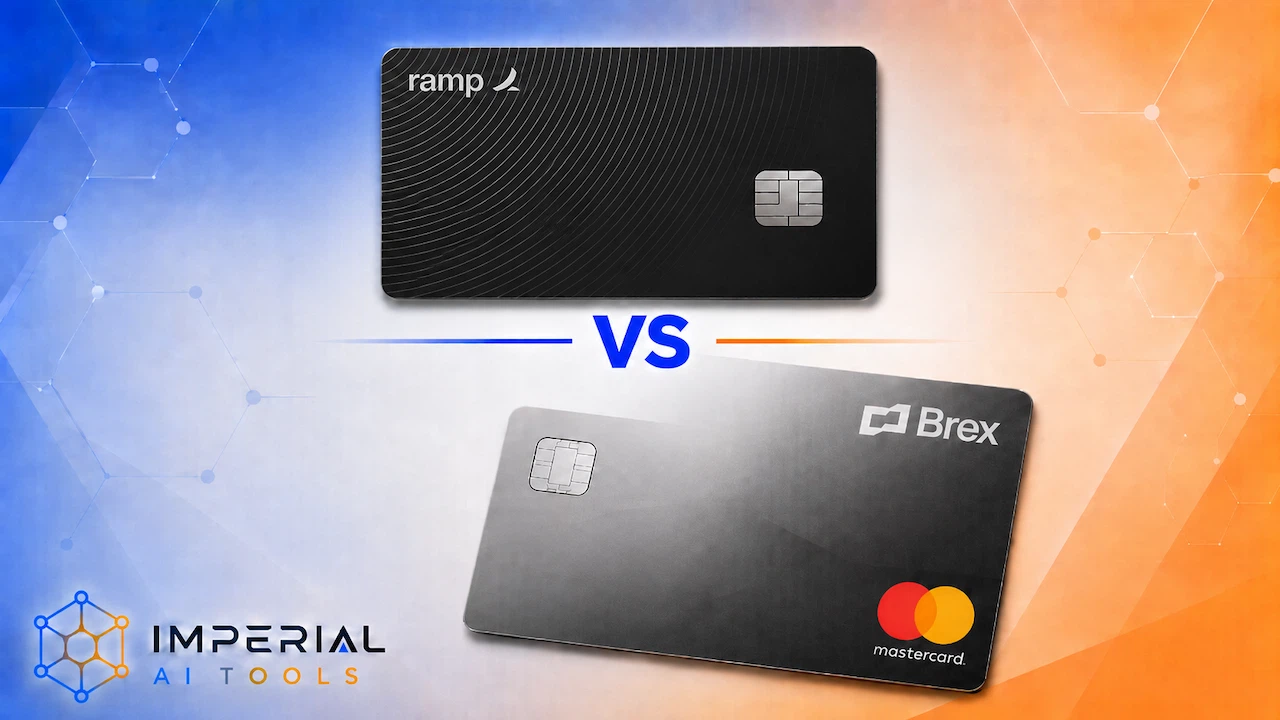

Choosing a corporate card used to be a simple question: which one gives better rewards? In 2026, that’s not the real question anymore. The bigger differentiator between Brex and Ramp isn’t cash back it’s how much of your finance team’s manual work each platform’s AI actually eliminates.
Brex chased venture-backed startups with global teams and travel-heavy budgets, layering category rewards and multi-currency infrastructure on top of an AI assistant that matches and categorizes spend. Ramp went after the much larger pool of U.S. small and mid-sized businesses with a sharper pitch: flat cash back, a free tier that actually works, and AI-driven automation that closes your books faster. If you’ve used AI-powered automation tools to cut manual work in other parts of your business, this comparison will feel familiar it’s the same evaluation, applied to spend management.
Most companies are using AI to reduce costs. AI isn’t just another tool, it’s a new foundation for building products, teams, and companies.
| Feature | Brex | Ramp |
|---|---|---|
| Target audience | Venture-backed startups, global teams | U.S. SMBs (Small and Medium-sized Businesses) and mid-market |
| Core reward model | Category multipliers (up to 7x) | Flat cash back (up to 1.5%) |
| Free tier | Essentials, card + core tools | Free tier, unlimited cards + QBO sync |
| Paid tier | Premium $12/user/mo | Plus $15/user/mo + platform fee |
| Minimum to qualify | ~$50K cash (monthly terms) or funding/$1M revenue | $25K linked U.S. bank balance |
| Global reach | Broad card issuance, VAT tools, 100 currencies | Mostly U.S.; local currency at Enterprise |
| Ownership | Capital One (since Apr 2026) | Independent |
What is Brex?
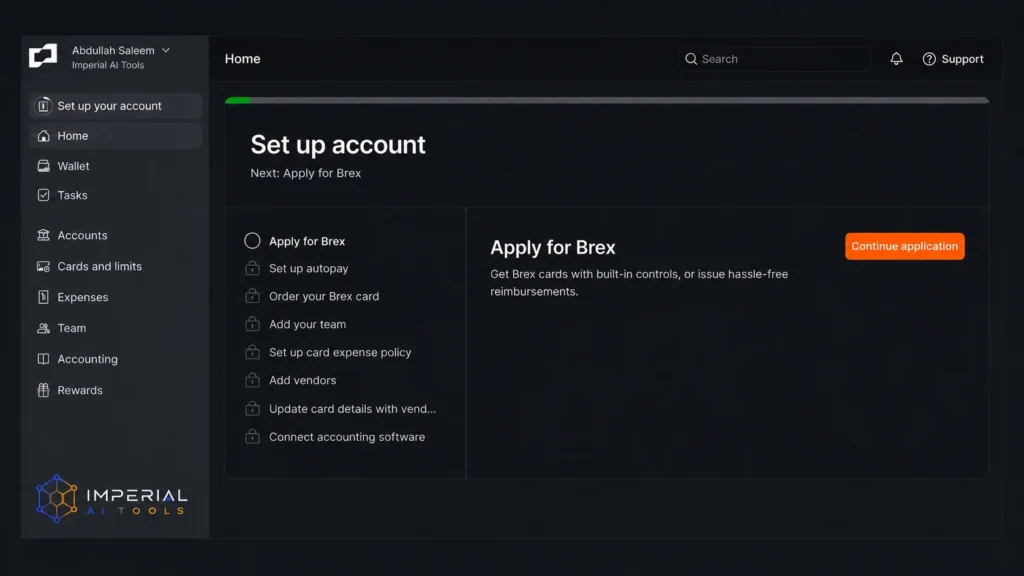
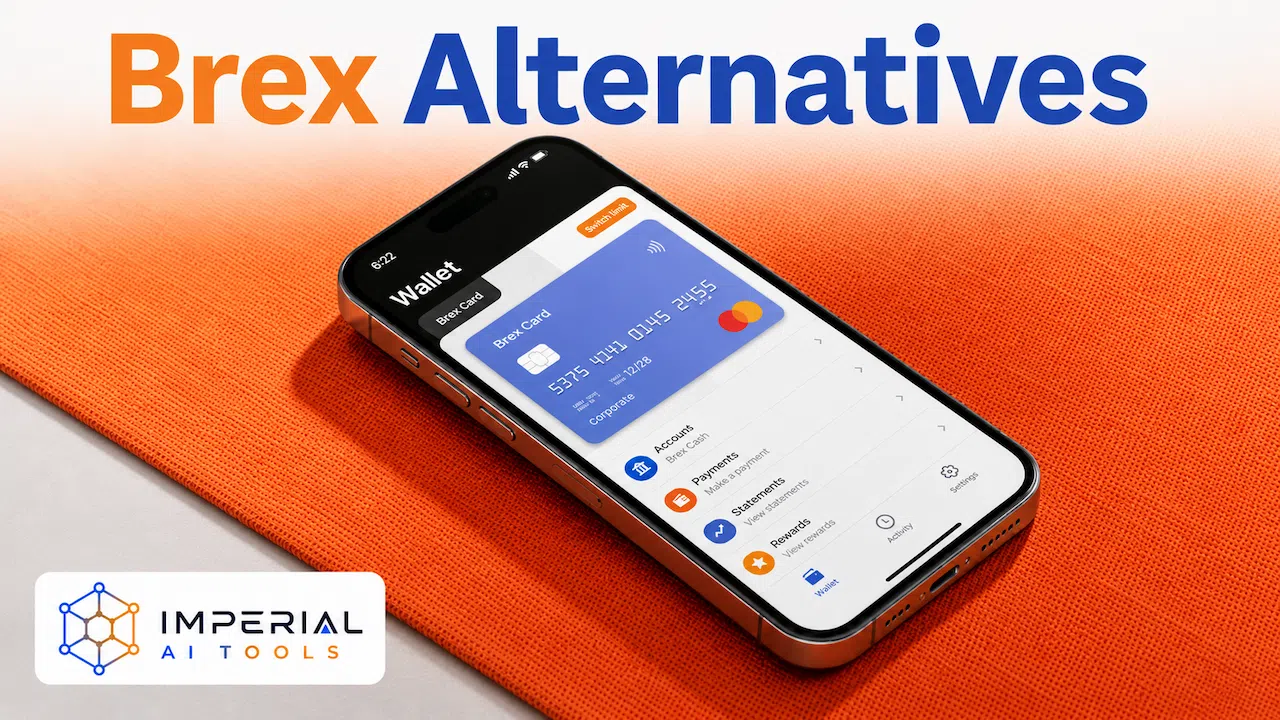
Brex is a corporate charge card and spend-management platform built for venture-backed startups and mid-market companies. It offers category-based rewards, multi-currency card issuance across a wide international footprint, and business banking, underwritten on company cash and revenue rather than personal credit. Its AI Assistant handles transaction matching and categorization automatically, functioning similarly to how AI chat tools handle repetitive lookups elsewhere in a business.
What is Ramp?

Ramp is a corporate charge card and AI-driven spend-management platform built for U.S. small and mid-sized businesses. It offers flat cash back, a genuinely usable free tier, and automated procurement, also underwritten on business financials with no personal guarantee.
What Changed in 2026
Capital One announced the Brex deal on January 22, 2026, and closed it on April 7, 2026. Products, pricing, and support are unchanged so far, but the long-term roadmap under bank ownership has not been defined publicly.
The deal timeline
- January 22, 2026
- Capital One announces an agreement to acquire Brex, headlined at $5.15 billion in cash and stock.
- April 7, 2026
- The deal officially closes. Capital One’s filings show the consideration actually paid at roughly $4.5 billion (about $2.56 billion cash plus 10.6 million shares).
- Post-close
- Brex operates as a wholly owned subsidiary, keeps its brand, and Pedro Franceschi stays on as CEO.
For context, the price sits well below Brex’s roughly $12.3 billion valuation peak in 2022, which tells you something about how the funding environment shifted.
What has and hasn’t changed
Card products, pricing tiers, and support have held steady since the close, per Capital One’s public statements. What nobody outside the company can confirm yet: whether underwriting shifts toward Capital One’s commercial models, where the product roadmap goes, and how deeply Brex integrates into Capital One’s banking stack. That is uncertainty to disclose, not a reason to panic. Bank ownership can also mean deeper capital and more stability, not only risk.
Why it matters for your decision
If you are signing up for a multi-year finance backbone, the identity of the owner is a real input. Ramp counters this simply by staying independent and shipping fast; the company reported a $44 billion valuation after a June 2026 raise and serves more than 70,000 customers. Weigh that against the possibility that Capital One’s resources make Brex more durable, not less. Both readings are fair.
How Brex and Ramp Determine Your Spending Power
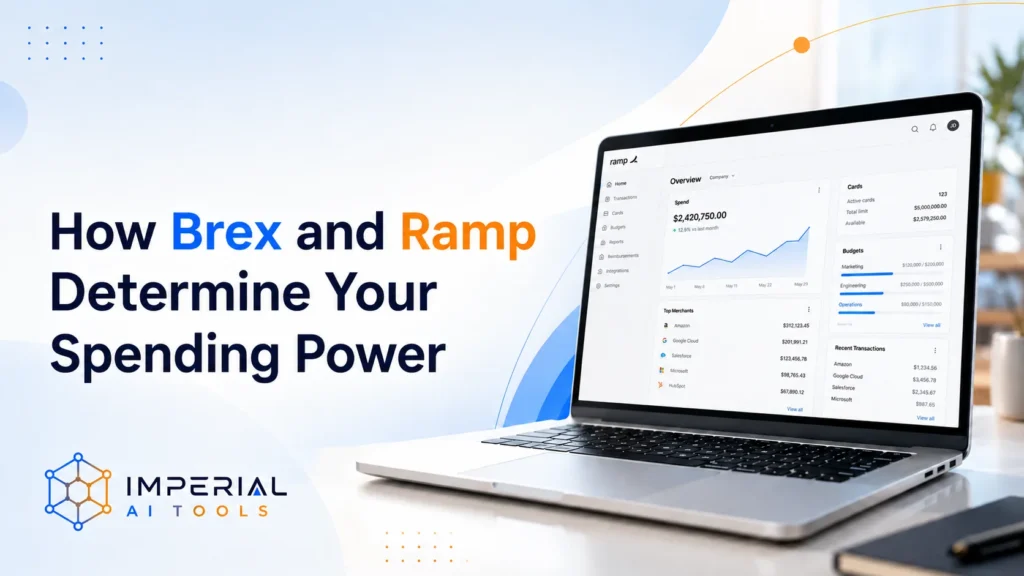
Both use programmatic underwriting on business financials with no personal guarantee. Brex leans on cash balance, revenue, and funding status; Ramp requires a $25,000 minimum linked U.S. bank balance and reads cash flow and revenue trends.
Neither runs a personal credit check, and neither asks a founder to pledge personal assets. That is the shared headline. The mechanics diverge underneath.
Brex evaluates your cash position, revenue trajectory, and whether you have institutional funding. Charge-card accounts require equity investment of any size, $1M+ annual revenue, or a startup referral. Funded startups can access monthly-repayment terms at roughly $50K cash, and limits often run 10 to 20 times higher than traditional small-business cards. Ramp accepts corporations, LLCs, and LPs (no sole proprietors), starts new accounts at a $10,000 temporary limit pending verification, and typically approves in about one business day.
Charge card, not revolving credit
Both are charge cards. The full balance is due each cycle, which is why neither charges interest and why neither suits a business that needs to carry a balance.
The repayment cadence is the practical difference. Ramp runs a 30-day cycle from your first transaction date. Brex offers daily or monthly settlement depending on your funding profile, and daily draws can create real cash-flow friction for a bootstrapped team that is used to float. Corporate liability sits with the entity, not the individual, so the risk that used to land on a founder’s personal credit now lands on the company balance sheet. That protects founders, but it also means a rough revenue quarter can shrink your limit programmatically, sometimes with little warning.
Expense Management, Automation, and Integrations
Both platforms use AI to match receipts, auto-categorize transactions, and flag anomalies. Ramp generates receipt memos and sends proactive reminders; Brex’s AI Assistant matches and categorizes automatically. Each cites a very high compliance rate (Brex points to 99%) on its own marketing pages, so treat those figures as vendor-reported and check G2 or Capterra for a neutral read.
The mechanical difference shows up at the point of sale. Ramp can hard-decline an out-of-policy swipe before it clears. Brex’s Live Budgets lean historically toward alerting and post-transaction review, though thresholds can decline too. For a cardholder standing at a checkout, “blocked now” and “flagged later” are very different experiences, and that gap is the operational detail most comparisons skip.
ERP and accounting sync
This is where the two genuinely part ways, and it matters most for anyone who closes the books.
- Ramp
- Real-time bi-directional sync with NetSuite and Sage Intacct, multi-entity support with custom field mapping, and transaction-level detail that flows automatically. Direct API connections to QuickBooks Online and Xero, with auto-categorization that learns your team’s coding.
- Brex
- Historically defaults to journal-entry-level sync, with transaction-level detail that customers often pulled via CSV. Its QuickBooks Online connection has been forward-only (edits in QBO do not sync back, and transactions older than 90 days do not sync). Brex’s own materials describe Oracle and NetSuite ERP integrations as current capabilities, so verify the live state before you commit, since this is a fast-moving product area.
For a bookkeeper, “real-time bi-directional” versus “journal entry by default” is the difference between a general ledger that reconciles itself and a month-end that starts with a CSV export.
Where Brex and Ramp Fall Short
Ramp’s friction shows up in eligibility gaps, opaque cashback rates, and platform fees that surface at renewal. Brex no longer serves bootstrapped businesses at all and carries acquisition-roadmap uncertainty.
Ramp Friction Points
- Sole proprietors and unregistered businesses are ineligible.
- International capability lags Brex for distributed teams.
- Cashback rate is assigned per customer and not published upfront.
- Platform fees of roughly $5,000 to $10,000 have surfaced at renewal for some organizations; verify against current pricing.
- New per-transaction bill-pay fees (about $0.59 ACH, $1.99 checks) took effect in June 2026, waived when funded from a Ramp account.
Brex Friction Points
- No longer serves bootstrapped small businesses. This is a hard eligibility wall.
- Forward-only QBO sync with a 90-day ceiling complicates retroactive cleanup.
- Rewards require active management to realize their value.
- A foreign-currency markup of up to 3% applies despite “no FX fee” marketing.
- Post-acquisition roadmap direction remains undefined.
Where neither is a good fit
- Nonprofits, churches, and schools needing fund accounting or restricted-fund tracking. Neither integrates natively with church or nonprofit accounting software.
- Businesses under $25,000 cash on hand. Neither will approve on standard terms; look at Capital One Spark, Chase Ink, or BILL Divvy.
- High-risk or prohibited industries. Brex prohibits categories such as marijuana-related businesses, and Ramp maintains its own prohibited-activities list.
Which Platform Fits Your Stack?
| Business profile | Pick | Why |
|---|---|---|
| Bootstrapped LLC, under $1M revenue, U.S.-only | Ramp | Meets the $25K threshold; free tier covers core needs; no equity or revenue floor. |
| Series A startup, heavy travel/software spend | Brex | Category multipliers multiply value; underwriting fits a funding profile. |
| Global or multi-entity team, 2+ countries | Brex | Broader card-issuance footprint and VAT/multi-currency tooling. |
| SMB prioritizing ERP automation and fast close | Ramp | Real-time bi-directional NetSuite/Sage sync; stronger QBO/Xero depth. |
| Nonprofit, church, or school with restricted funds | Neither | Neither integrates fund accounting natively. |
| Business with under $25,000 cash | Neither | Consider Capital One Spark, Chase Ink, or BILL Divvy. |
| Evaluating Brex in mid-to-late 2026 | Proceed with awareness | Product and pricing are stable so far, but the Capital One roadmap is undefined. |
Conclusion
The Brex versus Ramp choice is not really about which card is better. It is about which platform matches how your business actually runs. Ramp is the safer default for most U.S. small and mid-sized teams. The free tier does real work, the ERP sync closes your books faster, and staying independent means the roadmap answers to customers rather than a bank integration plan. Brex still wins where it always has: funded startups that spend heavily on travel and software, and teams operating across multiple countries.
The Capital One acquisition doesn’t break Brex. Products, pricing, and support have held steady since the April close. It just adds one honest question to a decision that, like most AI tool comparisons, comes down to fit rather than a single “best” answer. For more head-to-head breakdowns like this one, see our full list of AI tool comparisons.
Frequently Asked Questions
Ramp competed on cost and automation, not rewards, and courted the SMBs (Small and Medium-sized Businesses) Brex dropped in 2022. That efficiency focus led to a ~$44B valuation while Brex sold to Capital One.
Yes. Banking-first platforms fund team cards from dedicated budgets, no credit application needed. A fit for those who cannot or prefer not to qualify for a charge card.
Not fully confirmed, but close. Brex reported ~$700M annualized revenue growing ~50% and called itself on track to profitability. Operating-cash-flow-positive in 2025 is not the same as net profit.
Qualify for an account, then stay on the free Essentials tier (card, expense management, basic sync). Advanced features require Premium at $12/user/month.
No. Neither requires a personal guarantee or credit check. Ramp needs a $25K bank balance; Brex needs roughly $50K cash for monthly terms.