
Anki gives you retention power; Quizlet gives you speed and polish, and the gap between those two things decides almost everything. If you’re a student staring at both download buttons and unsure which one deserves your study hours, this comparison answers it: how they differ on spaced repetition, price, AI features, offline use, and who each one actually serves best. Both apps make digital flash cards. Only one is built to keep facts in your head for months. The other is built to get you reviewing in under a minute.
I’ve used both for real exam prep, not a five-minute trial. Anki carried heavy, high-volume material over long timelines. Quizlet handled quick, collaborative review. That difference in purpose is the whole story, and it’s why the right pick depends entirely on what you’re studying and for how long. Here’s the short version before the detail.
I really just built [Quizlet] for my own use when I was studying for a French test. I wanted to create a tool that would help me learn the material efficiently.
What Is Anki?
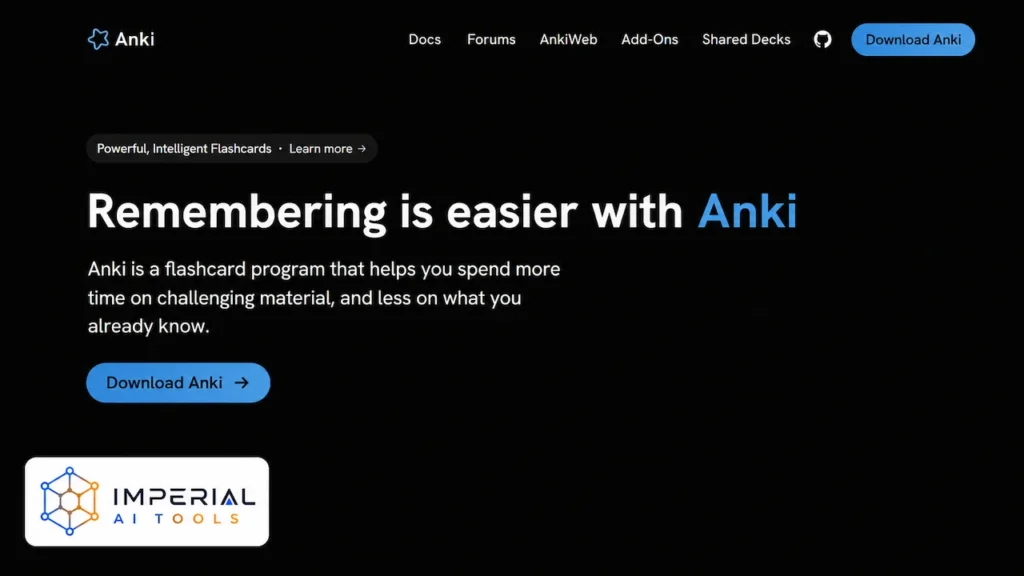
Anki is a free, open-source flashcard program built around a spaced repetition algorithm. Rather than letting you review cards in any order, Anki schedules each card individually, showing it to you right before you’re statistically likely to forget it. This scheduling is powered by FSRS (Free Spaced Repetition Scheduler), which adjusts intervals based on your performance and desired retention level. Anki was created by Damien Elmes and has been maintained as an open-source project for nearly two decades; in February 2026, stewardship transitioned to AnkiHub while the software remained free and open source.
Anki supports deep customization through card templates, cloze deletion, image occlusion, and a large library of community-built add-ons. It runs fully offline on desktop, Android (via AnkiDroid), and iOS (via AnkiMobile), with optional syncing through AnkiWeb. Because it stores data as local files, Anki gives users full ownership and control over their content.
What Is Quizlet?
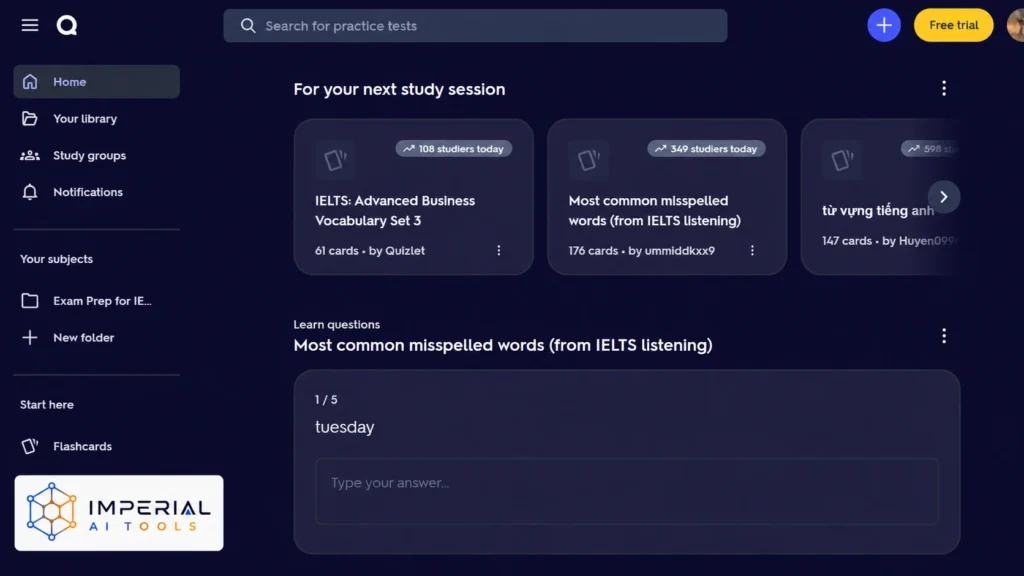
Quizlet is a web and mobile study platform designed around speed, accessibility, and collaboration rather than long-term scheduling. It offers digital flashcards alongside game-like study modes such as Learn, Test, Match, and Write, which adapt within a single session by resurfacing cards you get wrong. Quizlet’s biggest strength is its massive library of premade, shareable sets created by students and teachers, paired with a clean, beginner-friendly interface that requires almost no setup. It also includes native AI tools for generating flashcard sets automatically.
However, Quizlet does not maintain a persistent, per-card review schedule across days or weeks, making it better suited for short-term review than months-long retention.
Anki vs Quizlet: Head-to-Head Comparison
| Feature | Anki | Quizlet |
|---|---|---|
| Spaced repetition | Yes, persistent per-card scheduling (FSRS) | Partial; in-session adaptation only |
| Cost | Free on desktop/Android; $24.99 one-time on iOS | Free tier; Plus $35.99/yr; Plus Unlimited $44.99/yr |
| Ease of use | Steeper learning curve | Beginner-friendly |
| Customization | Extensive (templates, add-ons, cloze, image occlusion) | Limited to built-in formats |
| AI features | Via third-party add-ons and external tools | Native AI set creation |
| Offline access | Full on desktop, Android, and AnkiMobile | Limited; generally needs Plus |
| Study modes | Review-focused with detailed stats | Flashcards, Learn, Test, Match |
| Data ownership | Local files you fully control | Stored in your Quizlet account |
The Real Difference: Spaced Repetition vs. “Learn Mode”
Human memory fades on a predictable curve. Research on the forgetting curve shows that newly learned information drops off sharply within days unless you revisit it. The fix, established across decades of memory research, is distributed practice: spreading reviews across time instead of massing them into one session.
This is where Anki and Quizlet split. Cramming (massed practice) feels productive because recall is easy while the material is fresh. It fails within a week. Distributed practice spaces reviews so each one lands as you’re about to forget, which is harder in the moment but far stronger for retention. That’s the mechanism behind Anki’s whole design.
Does Quizlet use spaced repetition? Not the way Anki does. Quizlet’s Learn mode adapts within a single study session, resurfacing cards you miss. But it does not maintain a persistent, transparent per-card review schedule across days and weeks. Anki’s default scheduler, FSRS (Free Spaced Repetition Scheduler), tracks every card individually and calculates its next review based on your desired retention. That long-term, per-card memory model is exactly what Learn mode lacks.
Anki vs Quizlet by Who You Are
Medical students
Anki. The volume and multi-year retention demand of medical material is exactly what FSRS scheduling is built for; use Quizlet only for quick group review.
Law students
Anki for rules, elements, and case principles; pair it with separate practice essays for application, since flashcards won’t train legal analysis.
Language learners
Anki, because audio cards, sentence context, and long-term vocabulary review compound over months in a way Quizlet’s session-based practice can’t match.
College and high school students
Quizlet for most day-to-day coursework and teacher-created sets; switch to Anki when a subject genuinely needs months of retention rather than a single test.
AnkiHub Transition: What Changed in February 2026
On February 2, 2026, Anki creator Damien Elmes announced he is handing off business operations and open-source stewardship to AnkiHub, founded by Nick Flint and Andrew Sanchez, after 19 years as sole maintainer, citing burnout. What didn’t change matters most: Anki remains open source, its pricing is not changing, and AnkiDroid continues as an independently governed project. If you were worried this affects whether Anki stays free or reliable, it doesn’t.
How to Export Quizlet Flashcards to Anki
This is a one-time manual transfer, not continuous syncing. Quizlet offers no native Anki export or two-way sync, and this method only moves sets you created yourself. Images and audio are not included.
- Open your set in Quizlet and click the three-dot More menu.
- Select Export, then choose a tab or comma separator.
- Copy the exported text.
- In Anki desktop, go to File → Import and select your file.
- Set the field separator to match what you chose in Quizlet.
- Map Field 1 to Front and Field 2 to Back, then import.
Which Flashcard App Should You Use
Anki is the better overall tool for serious memorization and long-term retention. It’s the correct answer to “is Anki better than Quizlet” for anyone studying medicine, law, or a language, or preparing for exams months out. The cost is a steeper setup and a plainer interface. Quizlet is the better choice for beginners, classrooms, and fast, engaging review when your test is close and speed beats scheduling control.
So here’s what to do in the next five minutes. If you’re prepping for boards or a professional exam, download Anki today and accept the setup cost; the retention payoff is worth it. If your exam is next week, stay on Quizlet and don’t waste time migrating. If you’re torn, use both: build and share in Quizlet, then export the cards you own into Anki for long-term review. For a broader view of the tools around your study stack, see our library of AI tool comparisons. Pick based on your timeline, not the hype.
Conclusion
So, which one should you pick? It really depends on what you need. If you want to remember things for months or years like for medical school, law school, or learning a new language go with Anki. Yes, it takes a little more time to set up, but it’s free (except for a small one-time cost on iPhone) and it actually keeps facts in your brain long-term. If your test is next week, or you just want something quick, easy, and fun to use with classmates, Quizlet is the better pick. It’s simple, fast, and great for last-minute review.
Honestly, you don’t have to choose just one. Many students use Quizlet to make and share cards, then move the important ones into Anki for deeper, longer study. Pick based on your timeline, not what’s trending.
Frequently Asked Questions
No, not the way Anki does. Quizlet’s Learn mode adapts within a study session but does not maintain a persistent per-card schedule across days and weeks the way Anki’s FSRS algorithm does.
Anki offers full offline support on desktop and Android, and AnkiMobile works offline once installed. Quizlet’s offline access is limited and generally requires a Plus subscription to study sets without a connection.
Anki is free on desktop (Windows, Mac, Linux) and on Android via AnkiDroid. The only paid component is AnkiMobile for iOS and iPad, a one-time $24.99 purchase, not a subscription.
Download the free desktop app, install AnkiDroid on Android, or use AnkiWeb in a browser. iOS and iPad are the only platforms that require the one-time AnkiMobile purchase.