
What Is OpusClip?
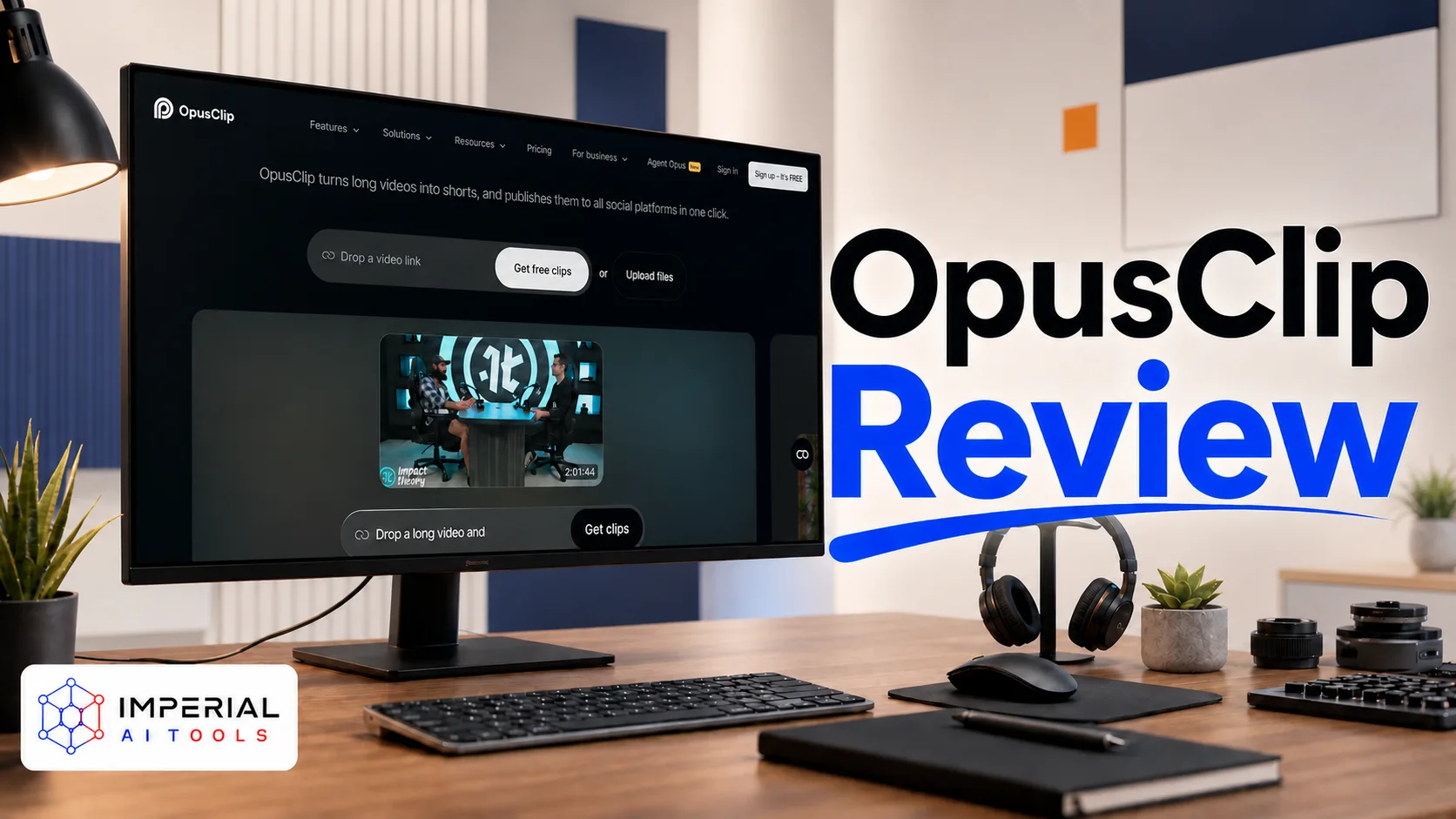
OpusClip is an AI video clipping tool built by OpusClip Inc. It takes one long video and cuts it into short clips for TikTok, Reels, and Shorts.
The problem it solves is simple. Creators sit on hours of podcasts, streams, and webinars. Turning that into shorts takes an editor and a full day. OpusClip does the first pass in minutes.
The company says 16 million creators and businesses use it. Named users include Mark Rober, Jacksfilms, and Grant Cardone. It suits podcasters, marketers, agencies, and anyone posting long videos who wants short clips from it.
The only AI tool that I’ve found helpful so far is OpusClip. It can do something that I don’t have time to do. I’m a super fan.
How Does OpusClip Work?
You paste a video link or upload a file. Imports work from YouTube, Google Drive, Vimeo, Zoom, Twitch, Rumble, and more.
The AI then reads the whole video. It looks at what people say, how they say it, and what appears on screen. From that, it picks moments likely to hold attention.
Each clip comes back reframed vertically, captioned, and trimmed. You review, edit, and post. Most of your work happens at that last step, and skipping it is the mistake beginners make.
Key OpusClip Features
- ClipAnything: Clips any genre, not just podcasts. Vlogs, sports, gaming, and explainers all work.
- Animated captions: Claimed at over 97% accuracy, in 25+ languages.
- AI Reframe: Tracks moving subjects so nobody drifts out of frame.
- AI B-Roll: Drops in relevant footage without a stock library hunt.
- Social scheduler: Plans a month of posts across platforms.
- Export to XML: Sends your edit to Premiere Pro or DaVinci Resolve.
Performance and Experience
Speed is the headline. A one-hour podcast returns finished clips in minutes. The same job takes an editor most of a day. That gap is the entire reason the tool exists, and it holds up.
Processing time scales with length, not complexity. A ten-minute video is quick. A three-hour stream takes longer and can queue during busy periods. Your free-plan minutes count against processing time, not output, so a long upload burns the cap fast even if you keep one clip.
Accuracy is good, not perfect. The AI finds moments that sound punchy in isolation. That is exactly what it optimises for, and it explains the failure mode: it sometimes cuts a joke before the punchline, or lifts a line that needed the setup you gave two minutes earlier. It reads energy well and meaning less well.
Captions land near the claimed 97% on clear English audio. Names, brands, technical terms, and strong accents still slip through. Nobody notices your captions until one is wrong, so check them.
Reframing handles a talking head reliably. Multiple speakers, fast movement, or anything with on-screen text gets less consistent. AI Reframe tracks subjects, but tracking is a guess, not a guarantee.
The interface stays out of your way. Paste a link, pick a preset, get clips. There is almost no learning curve, which is rare in video software.
That ease has a cost. The AI decides first, and you correct after. Beginners skip the correction step, then wonder why their clips underperform. The tool gives you a fast first draft, not a finished edit. Treat the output as raw material, and it saves real hours. Publish it untouched, and you ship clips that miss the point of what you said.
Integrations and Compatibility
OpusClip runs in the browser, so no download is needed. Imports cover the major video sources, and publishing reaches the main social platforms directly.
Developers get an API. Teams building agent workflows get MCP support. Editors who want full control can export to XML and finish in Premiere or Resolve.
Who Should Use OpusClip?
Best suited for: podcasters with a back catalogue, marketers producing volume, agencies cutting client costs, livestreamers repurposing sessions, and creators who post long video and want shorts from it.
Not ideal for: people who want frame-level control, creators making shorts natively rather than from long video, teams needing heavy processing on a free plan, and anyone whose content depends on nuance the AI will flatten.
Imperial AI Tools Feedback
OpusClip earns its position by doing one job better than anything else: finding usable moments in long video, fast. The clipping is genuinely strong, ClipAnything handles genres that trip up rivals, and the free plan is real rather than a teaser.
The gaps are honest ones. The AI picks moments that sound good in isolation, so context gets lost, and you edit the result. Free clips carry a watermark, and 60 minutes of monthly processing runs out quickly for anyone posting daily. Support means a help center and Discord, not a person.
Our view: treat it as a fast first draft, not a finished edit. Used that way, it saves real hours. Trusted blindly, it publishes clips that miss the point of what you said.
Where can it be improved?
- Context awareness – The AI picks moments that sound punchy in isolation, so it cuts jokes before punchlines and lifts lines that need setup. It reads energy well and meaning less well.
- Clearer cap warnings – Free minutes count against upload length, not output. A long video burns the cap even if you keep one clip, and nobody tells you until it’s gone.
- Caption edge cases – Names, brands, and technical terms still slip through. Nobody notices captions until one is wrong.
- Reframe consistency – Tracking handles a single speaker reliably. Multiple people, fast movement, or on-screen text gets shaky.
- One-off credits – Most people need this in bursts, not monthly. A pay-per-video option would fit real usage better than a subscription.
- Live support – Help center and Discord only. Paying customers should reach a person.
Overall, OpusClip is a fast first draft, not a finished edit. Used that way, it saves real hours. Trusted blindly, it ships clips that miss the point of what you said.