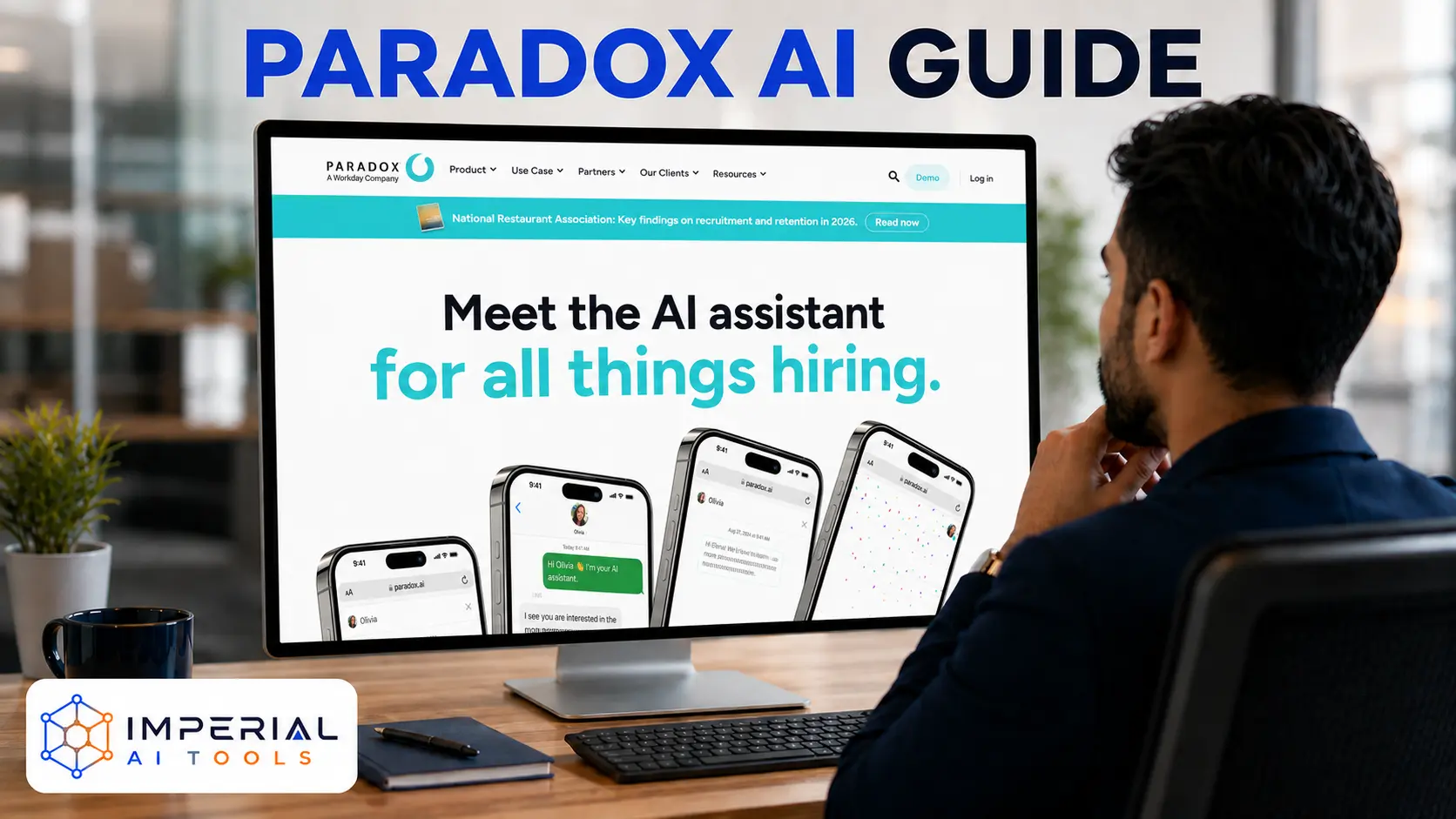

If you have applied for a job at McDonald’s, FedEx, Chipotle, or Lowe’s in the last couple of years, there is a good chance you have already met Paradox AI, usually without realizing it. That friendly assistant texting you about a shift interview? That is Olivia, Paradox’s conversational recruiting bot. This review breaks down what Paradox AI is, how the Olivia AI recruiting assistant works, which companies use it, whether it is legit, and what changed in 2026 after Workday acquired the company.
What is Paradox AI?
Paradox AI is a conversational AI recruiting platform designed to automate the repetitive, time-consuming parts of hiring. Instead of asking candidates to dig through a careers page and fill out a long form, Paradox lets them apply, get screened, and schedule an interview through a natural back-and-forth conversation, typically by text message or mobile chat.
The platform is best known by the name of its assistant, Olivia, which is why many people search for “Olivia Paradox AI” or “Olivia AI recruiting” rather than the company name itself.
Company Background
- History:
- Paradox was founded in 2016 and is headquartered in Scottsdale, Arizona. It grew quickly by focusing on a specific, painful problem: high-volume frontline hiring, where a single employer might need to fill tens or hundreds of thousands of roles a year. Before the Workday deal, Paradox had raised a $200 million Series C round in 2021, valuing the company at roughly $1.5 billion.
- Founder:
- The founder and CEO is Aaron Matos, a longtime HR professional who previously ran a local job board and a corporate career-site company before starting Paradox. His background in human resources shaped the product’s core idea to give recruiters their time back so they can focus on people instead of paperwork.
- Mission:
- Paradox’s stated goal is to replace hiring “friction” with conversation. The company likes to describe itself, only half-jokingly, as the software company that does not want you to spend time in its software. The point is to automate the busywork, not to add another dashboard to babysit.
How does Paradox AI work?
At the center of everything is Olivia. When a candidate lands on a Paradox-powered careers page or clicks a job link, she starts a conversation asking knockout screening questions (age, availability, licenses), scheduling interviews against recruiter calendars, answering common questions about pay and hours, sending reminders to cut no-shows, and moving qualified candidates forward to assessments or offers. All of it syncs back into the employer’s existing system of record, so recruiters see updated statuses without pushing anything around manually.
Key Features of Paradox AI
- Conversational AI Chatbot Olivia handles natural, human-sounding conversations over text, web chat, and messaging; the “Paradox AI chatbot” most candidates interact with.
- Interview Scheduling Automation. Its strongest feature: self-scheduling across hundreds of calendars, plus reschedules and reminders to cut no-shows.
- Candidate Screening Automated knockout questions qualify or disqualify applicants up front.
- Mobile-First Applications Apply by phone through chat, with no long forms or passwords.
- ATS Integration: Native integrations with Workday, SAP SuccessFactors, iCIMS, Oracle HCM, and Greenhouse, plus an open API.
- Hiring Event Management runs in-person and virtual events with automated registration, reminders, and scheduling.
- AI Candidate Matching Matches applicants to roles based on responses, availability, and location.
- Multilingual Support operates in 100+ languages.
- Analytics & Reporting Dashboards track drop-off, time-in-stage, and no-show rates.
Paradox AI Careers & Jobs
Finding Jobs Through Olivia
To find “Paradox AI jobs,” you are really looking for roles at the companies that use Olivia. Visit an employer’s careers page (FedEx, McDonald’s, Lowe’s, etc.), and you will be routed into an Olivia conversation for open roles.
Interview Process
Expect a quick screening chat, an automatically scheduled interview, reminders, and, with some employers, a short assessment. The whole front end can happen on your phone in minutes.
Tips for Success
- Answer screening questions accurately; knockout questions are literal.
- Respond promptly, since slots fill fast.
- Have your availability ready so scheduling is smooth.
- Keep an eye on your texts and email for updates and reminders.
Paradox AI vs Traditional Recruiting
Speed
Traditional recruiting can leave candidates waiting days for a reply. Olivia responds instantly and can schedule an interview within minutes.
Automation
Manual screening and calendar coordination are replaced by an assistant who works around the clock without getting tired or falling behind.
Candidate Experience
Long forms and radio silence give way to a simple, responsive conversation, which tends to improve completion and show-up rates.
Recruiter Productivity
Instead of drowning in administrative tasks, recruiters focus on interviews and decisions, handling far more openings per person.
What’s working well
- The structure is solid and genuinely comprehensive; it covers the full search intent (what it is, how it works, is it is legit, login, jobs, FAQ).
- The McHire breach and Workday acquisition are your two biggest credibility assets. Most competing “Paradox AI review” articles miss or bury these. Keeping them prominent is what will make this rank and get it trusted.
- Keyword coverage is natural, not stuffed. Good.
Where it’s weak / what I’d fix
- No pricing section. “Paradox AI pricing” / “cost” is a high-intent search you’re not capturing. Even a short, honest paragraph (“custom quote, not public, generally starts around four figures/month for enterprise”) would add value and catch traffic. Right now, it’s only a one-line mention under Cons.
- No alternatives/comparison. People reviewing Paradox often compare it to competitors (e.g., HireVue, Sense, Fountain, Workday itself). A short “Paradox AI Alternatives” section captures comparison searches and keeps readers on the page longer.
- The article reads slightly PR-friendly in places. For an “Is it legit” review, add one or two real candidate complaints (the impersonal AI experience, the personality-test frustration people voiced online). You touch on it, but a bit more of the applicant’s perspective makes it feel independent, not sponsored.
- Publish date/freshness signal. Add a visible “Last updated: [month] 2026” line near the top. Google and readers both reward it for a “2026 review.”
- Thin sections. A few H3s (login problems, tips) are a little generic. They’re fine, but if you want depth, real examples (“candidates report the link expires after 72 hours”) beat generic advice.