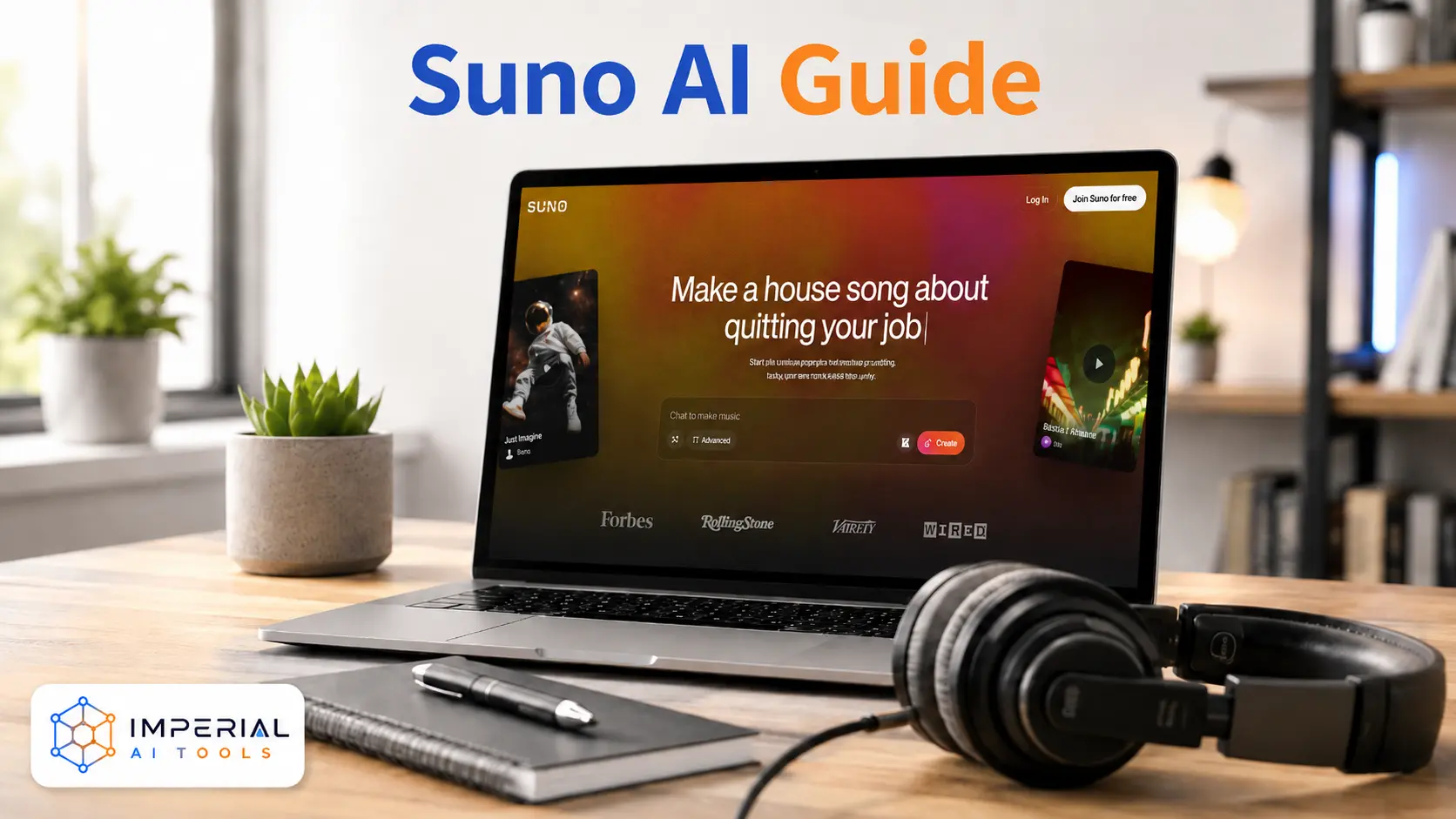

Create complete songs, vocals, lyrics, and instruments from a single line of text. No studio, no instruments, no music theory.
Suno AI is one of the most talked-about AI music tools right now, and for good reason: it turns a plain text prompt into a finished track in under a minute. But is it actually good, and is it safe to use for content you plan to monetize?
What Is Suno AI?
Suno AI is a generative music platform that turns text prompts into complete songs. You describe what you want: a genre, a mood, a subject, and Suno writes the lyrics, composes the music, and sings it back to you with AI vocals.
What makes it stand out is how little it asks of you. Traditional music production needs instruments, recording gear, software, and years of skill. Suno removes all of that. A first-time user can type a prompt and have a finished song in the time it takes to read this paragraph.
That accessibility is why the Suno AI music generator became popular so fast. It launched in 2023 and quickly became the tool that introduced most people to AI music, the way ChatGPT did for text. As a Suno AI song generator, it now handles everything from background music for videos to full vocal tracks.
Suno AI Key Features
- Text-to-Music Creation
- Turns a written idea into music. You choose the genre, mood, and style, and Suno builds the song around it.
- AI Lyrics and Vocals
- Writes original lyrics automatically, or lets you paste your own, then delivers them with realistic AI singing voices.
- Music Styles and Genres
- Handles a wide range: pop, hip-hop, rock, electronic, and cinematic, among many others.
- Song Editing Tools
- Extend a track, create variations, or refine a generated song. The v5.5 model also adds Voices, letting you build a profile of your own voice, and Custom Models for more control over the sound.
Suno trained on essentially every recorded song available on the internet, without consent, with the explicit business goal of replacing the listening patterns of the music it trained on. Adam Neely
How to Use Suno AI
Getting started takes only a few minutes:
- Create an account at suno.com and complete the Suno AI login.
- Enter a music prompt describing the song you want.
- Select style and mood genre, tempo, and feel.
- Generate your song and let Suno build the full track.
- Download and share your finished song.
That’s the whole workflow. Most of the skill in using Suno well comes down to writing better prompts, which is the next section.
Best Suno AI Prompts
A good Suno prompt usually follows a simple formula:
Genre + Mood + Voice + Instruments + Style
The more specific each part is, the closer the result matches what you imagined. A few examples:
- Cinematic soundtrack: “Epic orchestral cinematic score, tense and building, deep strings and booming drums, trailer-style.”
- Rap song: “Old-school boom-bap hip-hop, confident male vocals, jazzy piano loop and vinyl crackle, 90s style.”
- Lo-fi music: “Chill lo-fi beat, calm and nostalgic, soft female humming, mellow keys and rain sounds, study-session vibe.”
Start broad, listen to the result, then adjust one element at a time.
Suno AI and Copyright: What Creators Must Know
This is the part most reviews skip, and it matters most if you publish for money.
Paid plans grant commercial usage rights, and Suno-generated tracks are not registered in YouTube’s Content ID, so they won’t trigger automatic copyright claims.
But there are two catches. First, the US Copyright Office holds that purely AI-generated music cannot be copyrighted meaning you may not fully “own” the song the way you’d own an original composition. Second, Suno faces ongoing copyright lawsuits over its training data, which creates some legal uncertainty for commercial users.
For personal use, the risk is low. For monetized or client work, use paid plans, keep records of what you create, and check Suno’s current terms before you publish.
Suno AI is one of the easiest ways to create music today. For beginners and content creators who need quick, original songs, background tracks, jingles, or demos, it delivers real value with almost no learning curve.
It is not a replacement for professional production, and the copyrighted picture means you should treat it carefully for commercial work. But as a tool for experimenting with songs and producing usable music fast, it’s genuinely worth trying. Start with the free plan, then move to Pro if you plan to publish.